
大家好,我是沙漠尽头的狼。

站长用Go写的这版博客前台代码比较原生,既没用什么框架,本来想着后面重构后再详细写写分享的,今天群友提了,就简单写写吧。
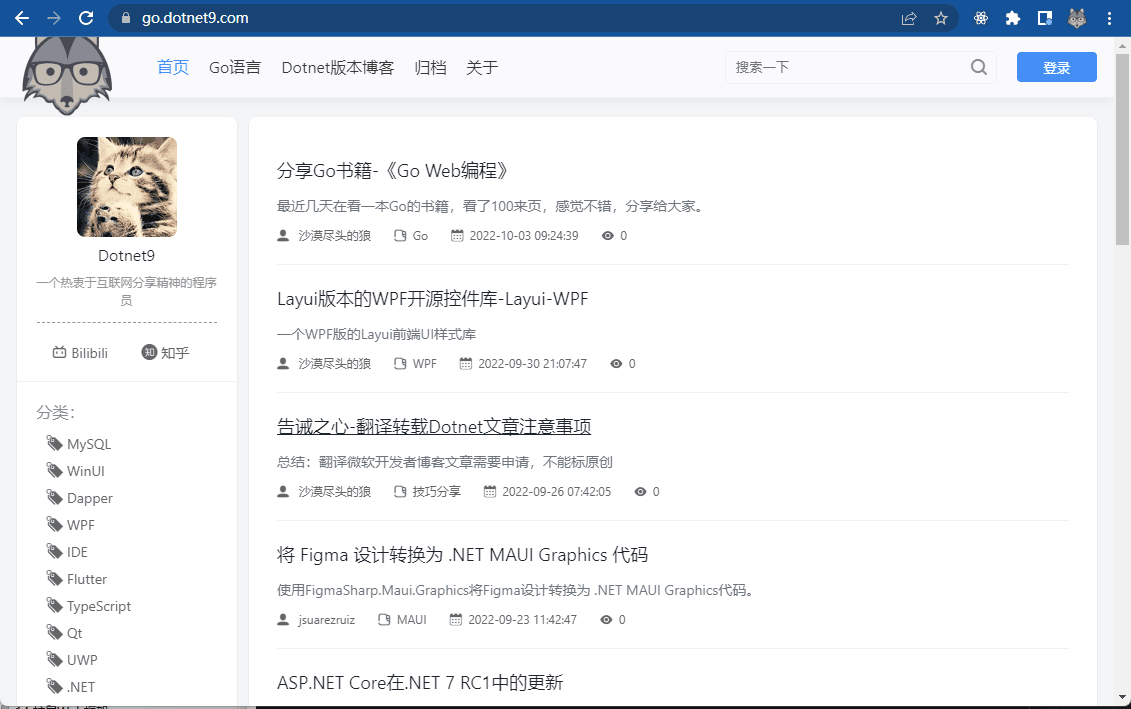
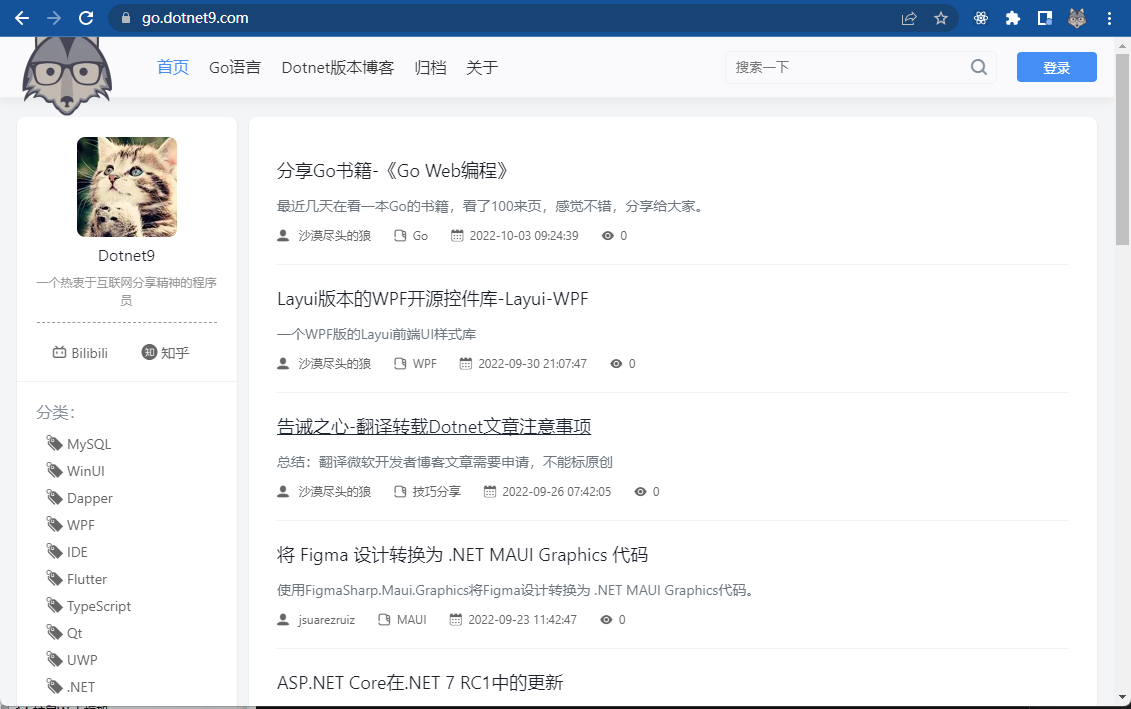
在线访问地址:https://go.dotnet9.com
首页截图:
本文写的很简单,还是来个目录:
- Go基础学习
- Go搭建博客参考
- Go版本博客源码
- 后面计划
1. Go基础学习
- Go中文文档:https://go.p2hp.com/doc/
- Go web编程:Q群(771992300)有PDF文件分享
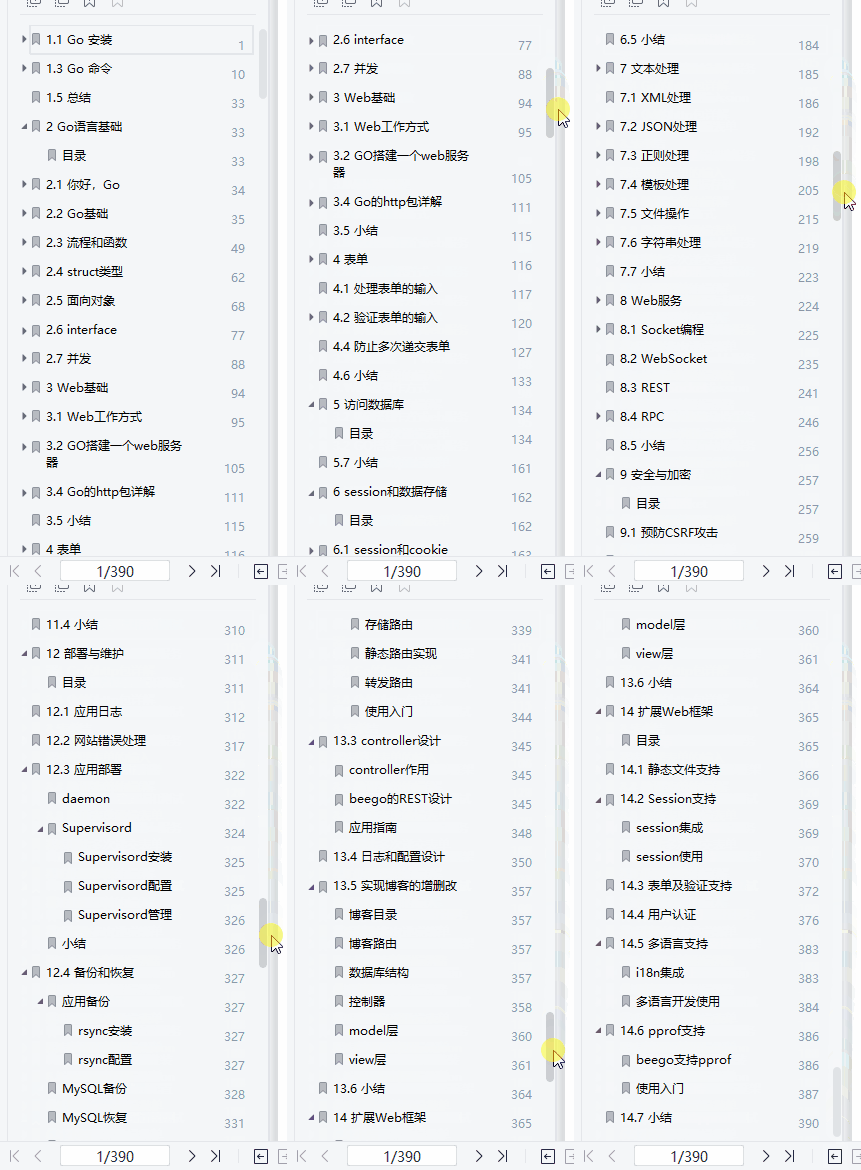
上面的网址和pdf,适合打基础、巩固Go的基础语法。其中PDF文件应该不是京东售卖的《Go Web编程》([新加坡] 郑兆雄)一书,但也非常不错,讲解了不少web基础知识,应该是网上一位大佬的总结,值得一读,下面是该pdf目录:
上面的基础资料建议未接触Go的同学阅读,基础很重要。
2. Go搭建博客参考
现重构的博客前台模板和Go版本学习资料出处:
B站Up主【码神之路】B站首页:https://space.bilibili.com/473844125
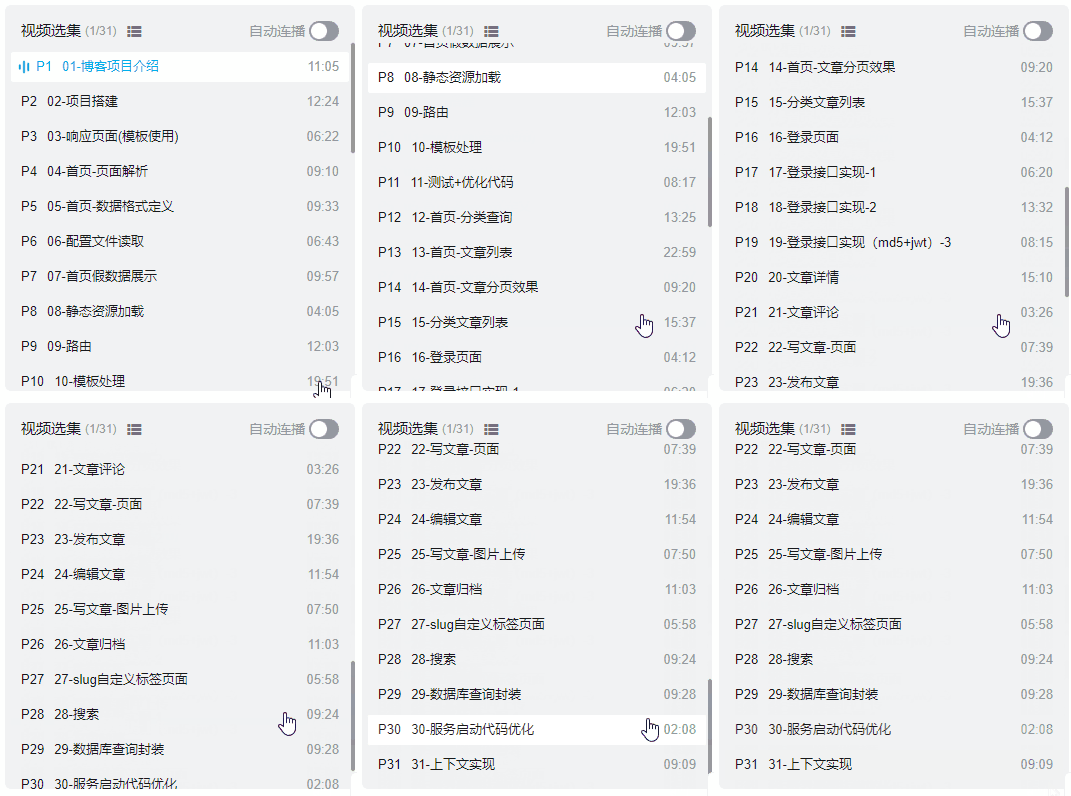
教程标题:【码神之路】原生Go语言博客实战教程,练手级项目实战教程,未使用任何框架,通俗易懂,十年大厂程序员讲解
视频目录如下:
视频配套的博文截图:
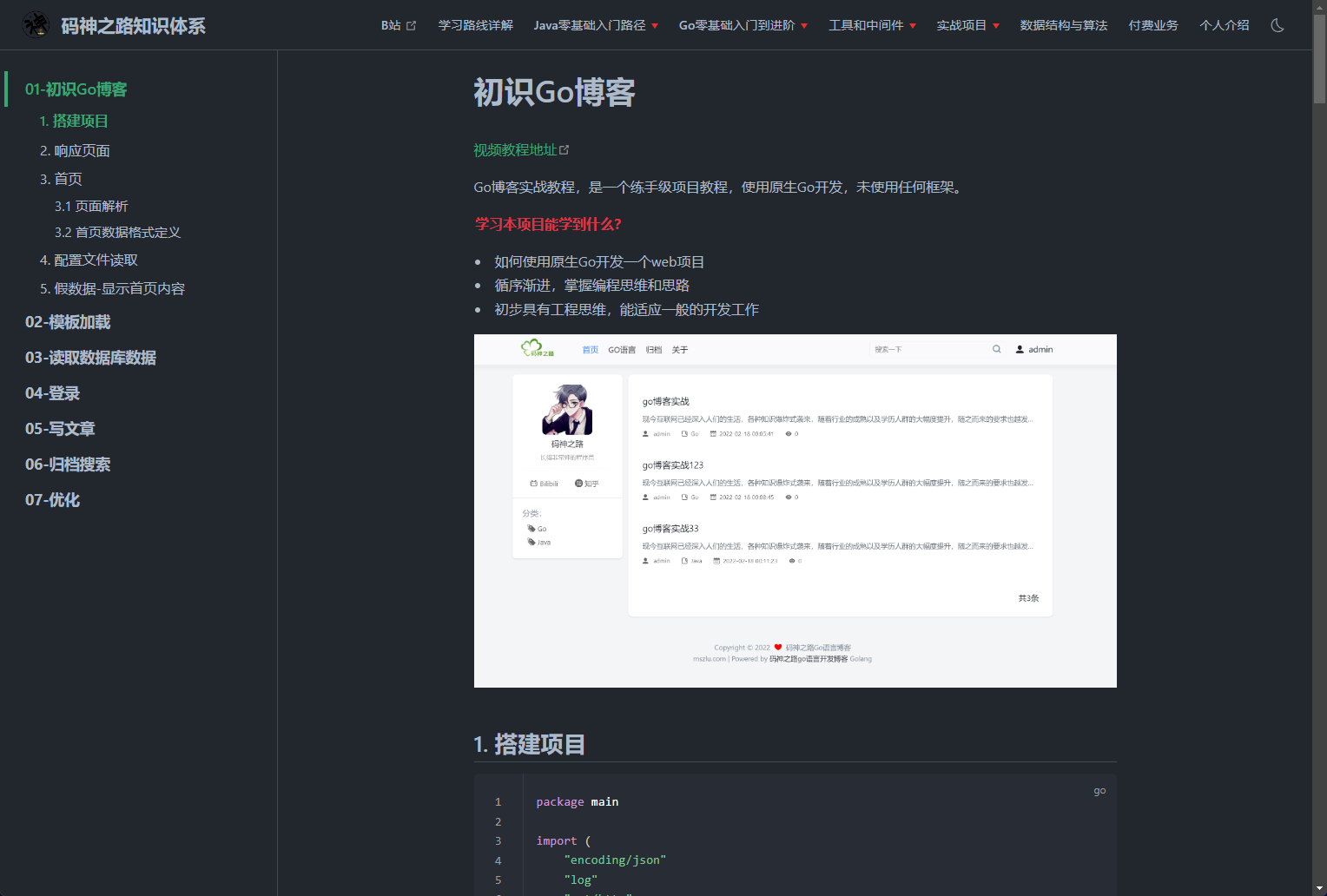
视频适合学习、动手实践,Up主配套的博文则适合辅助检查代码是否正确,博客配套的前端模板在Up主群里有分享(群号【718840650】),站长代码仓库也有上传,但是有部分与Up主改动不同,部分个性化修改如下:
- 站长未添加前台文章编辑:Dotnet9网站有后台文章管理功能,功能重合了。
- ORM选择不同:站长选择的GORM。
- 文章搜索站长直接调用的Dotnet9网站后端接口,未在Go中再写接口实现:Web API与前台职责分明,也为了其他客户端接口共用,比如Razor Pages博客前台也使用了相同的文章搜索接口。
- 其他。
3. Go版本博客源码
如B站Up主【码神之路】视频教程标题所说“原生Go语言博客实战教程,练手级项目实战教程,未使用任何框架,通俗易懂”,重点是原生,站长实践后发现Up主的路由相关写法与 ASP.NET Core 的Minimal APIs(最小API)相像,当然前者主要是写Web(MVC),后者是写Web API,实践中与自己熟悉的技术比较学习能加深理解,下面对Go版博客源码进行部分简单介绍。
3.1 入口
main.go为程序入口文件,相当于 ASP.NET Core 的Program.cs文件,文件名可以修改,只要代码第一行为package main。
全部代码如下:
package main

import (
	"log"
	"net/http"
	"dotnet9.com/goweb/common"
	"dotnet9.com/goweb/router"
)

func init() {
	// 模板加载:html文件,比如首页文章列表、分类文章列表、页头、页尾等
	common.LoadTemplate()
}

func main() {
	server := http.Server{
		Addr: "127.0.0.1:8080",
	}
	router.Router()
	if err := server.ListenAndServe(); err != nil {
		log.Fatal(err)
	}
}
服务绑定IP与端口是写死的,可写到配置文件,你就说和如下 ASP.NET Core 最小API像不像吧:
var app = WebApplication.Create(args);

app.MapGet("/", () => "Hello World!");

app.Run("http://localhost:3000");
router.Router()是简单封装的路由(封装如下),和上面最小APIapp.MapGet("/", () => "Hello World!");像几分,能给到8分不?:
go的简单路由封装:router.go
package router

import (
	"net/http"
	"dotnet9.com/goweb/views"
	"dotnet9.com/goweb/api"
)

func Router() {
	http.HandleFunc("/", views.HTML.Index)
	http.HandleFunc("/c/", views.HTML.Category)
	http.HandleFunc("/p/", views.HTML.Detail)
	http.HandleFunc("/login", views.HTML.Login)
	http.HandleFunc("/api/v1/post", api.API.SaveAndUpdatePost)
	http.Handle("/resource/", http.StripPrefix("/resource/", http.FileServer(http.Dir("public/resource/"))))
}
路由首页代码如下:
./views/index.go
package views

import (
	"errors"
	"log"
	"net/http"
	"strconv"
	"dotnet9.com/goweb/common"
	"dotnet9.com/goweb/service"
)

func (*HTMLApi) Index(w http.ResponseWriter, r *http.Request) {
	// 这里是业务代码,读取文章列表,绑定模板
}
3.n 模板绑定
中间跳过orm等使用,说说模板绑定:
这是Go的文章列表模板:./template/layout/post-list.html
{{define "post-list"}}
<ul class="post-box">
{{range $index, $elem := .Posts}}
<li class="post-label">
<a href="/p/{{$elem.Slug}}"><h2>{{$elem.Title}}</h2></a>
<p>{{$elem.Description}}</p>
<div class="post-action">
<span>
<i class="iconfont icon-yonghu"></i>
{{$elem.Original}}
</span>
<span>
<i class="iconfont icon-wenjianjia"></i>
{{range $catIndex, $cat := $elem.Categories}}
<a href="/c/{{$cat.Slug}}">{{$cat.Name}}</a>
{{end}}
</span>
<span>
<i class="iconfont icon-riqi"></i>
{{$elem.CreationTime}}
</span>
<span>
<i class="iconfont icon-yanjing"></i>
{{$elem.ViewCount}}
</span>
</div>
</li>
{{end}}
</ul>
{{end}}
对比这是Razor Pages文章列表模板绑定:
@page
@inject IOptionsSnapshot<SiteOptions> SiteOptions
@using Dotnet9.Web.ViewModel.Commons
@model IndexModel
@{
ViewData["Title"] = "首页";
}
<ul class="post-box">
@if (Model.BlogPosts?.Any() == false)
{
<span>没有数据哦</span>
}
else
{
@foreach (var blogPost in Model.BlogPosts!)
{
<li class="post-label">
<a href="@blogPost.CreationTime.ToString("/yyyy/dd")/@blogPost.Slug">
<h2>@blogPost.Title</h2>
</a>
<p>@blogPost.Description</p>
<div class="post-action">
<span>
<i class="iconfont icon-yonghu"></i>
@(blogPost.Original.IsNullOrWhiteSpace() ? SiteOptions.Value.Owner : blogPost.Original)
</span>
<span>
<i class="iconfont icon-wenjianjia"></i>
@foreach (var cat in blogPost.Categories)
{
<a href="/cat/@cat.Slug" title="@cat.Description">@cat.Name</a>
}
</span>
<span>
<i class="iconfont icon-riqi"></i>
@blogPost.CreationTime.ToString("yyyy-MM-dd")
</span>
<span>
<i class="iconfont icon-yanjing"></i>
@blogPost.ViewCount
</span>
</div>
</li>
}
}
</ul>
@await Html.PartialAsync("_PaginationPartial", new PaginationModel(Model.Current, Model.Pages, Model.Total, Model.PageSize, Model.PageCount))
代码看个大概:
- Go模板绑定使用
{{.对象字段}},注意前面的点 - Razor语法绑定使用
@Model.对象
语言都是相似的,熟悉一个技术栈,其他技术栈可以触类旁通。
3.n+1评论
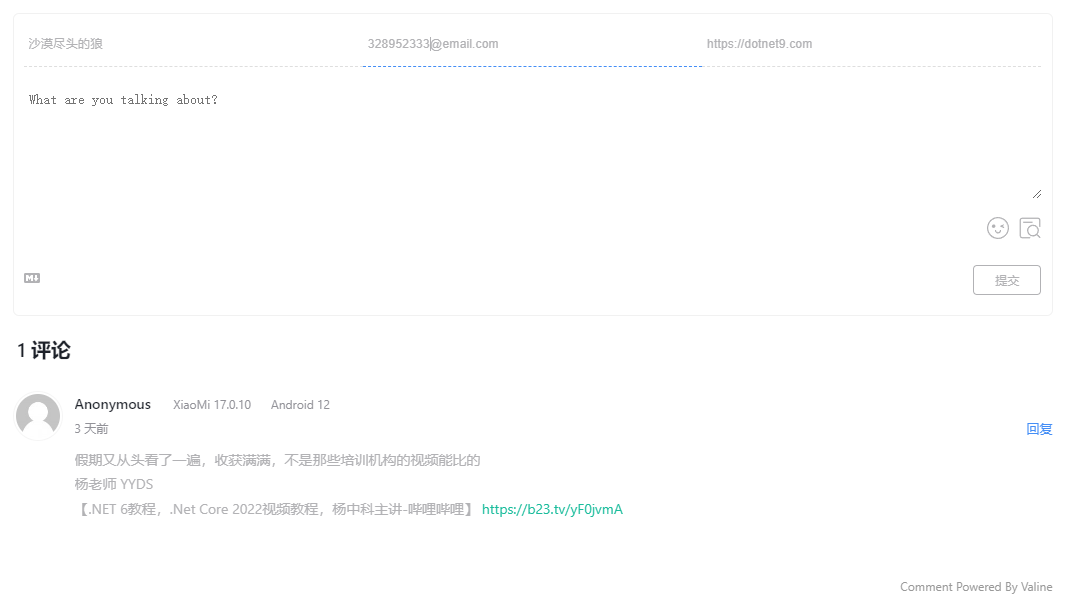
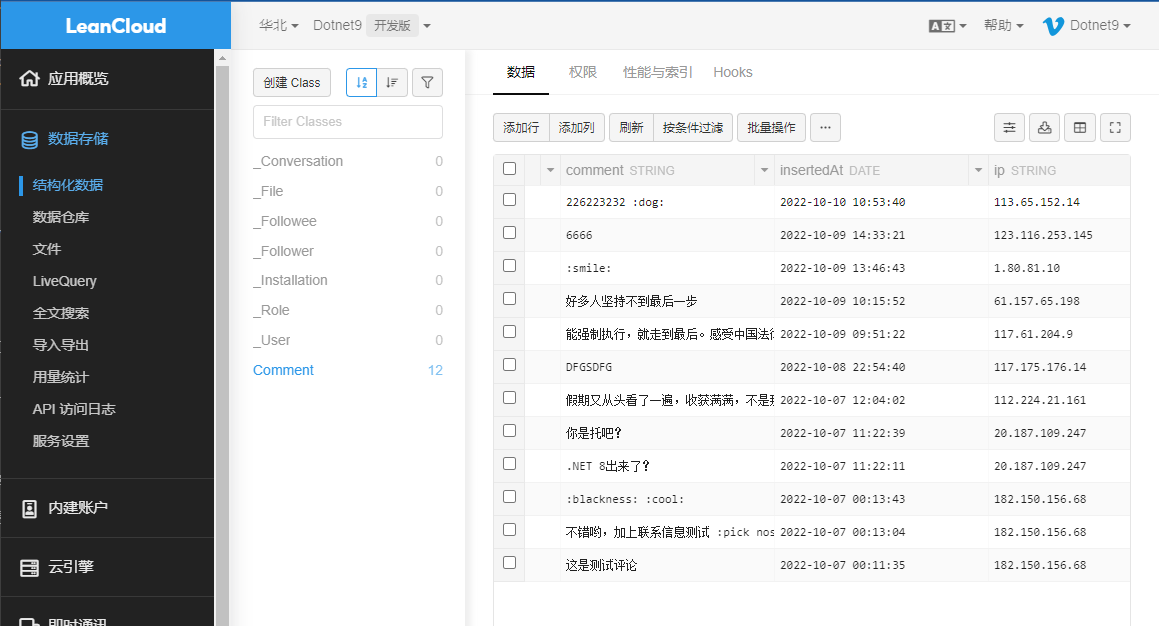
评论对接的第三接口Valine,后面考虑自己开发:
Valine - 一款快速、简洁且高效的无后端评论系统。
特性
- 快速
- 安全
- Emoji 😉
- 无后端实现
- MarkDown 全语法支持
- 轻量易用
- 文章阅读量统计 v1.2.0+
网站使用截图:
Valine留言后台管理:
4. 后面计划
学习Go,或者一门新技术,不能光是学,需要找机会用起来。尝试使用Go做一个自己感兴趣的项目,比如开发一个简单的博客前台,相信自己会学习的更有动力,起初可以尝试原生开发,即不使用框架,对了解一门语言的基础语法很有益处。
当想快速进行业务开发、迭代时,可以考虑框架了,站长最近有关注 goframe:
GoFrame是一款模块化、高性能、企业级的Go基础开发框架。GoFrame是一款通用性的基础开发框架,是Golang标准库的一个增强扩展级,包含通用核心的基础开发组件,优点是实战化、模块化、文档全面、模块丰富、易用性高、通用性强、面向团队。如果您想使用Golang开发一个业务型项目,无论是小型还是中大型项目,GoFrame是您的不二之选。如果您想开发一个Golang组件库,GoFrame提供开箱即用、丰富强大的基础组件库也能助您的工作事半功倍。如果您是团队Leader,GoFrame丰富的资料文档、详尽的代码注释、活跃的社区成员将会极大降低您的指导成本,支持团队快速接入、语言转型与能力提升。
GoFrame官方文档:https://goframe.org/pages/viewpage.action?pageId=1114119
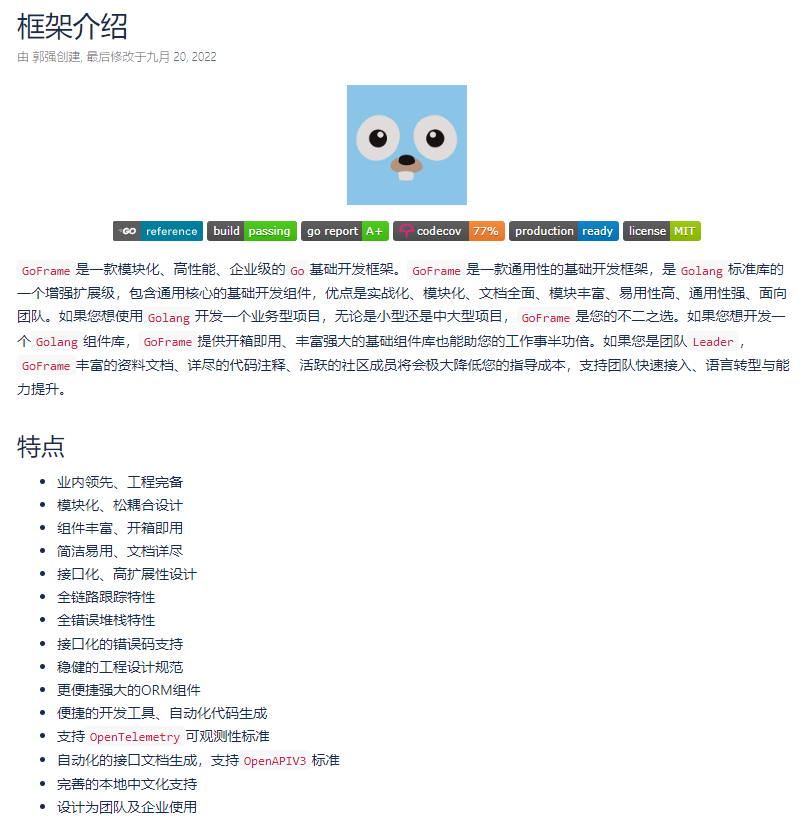
后面就用goframe重构这版go博客吧,当然前提是先把Razor Pages版本博客开发完善了,包括后台...
水文结束(花了2小时),只要肯花时间学,没什么学不会的,不服就一个字:整。