

问题来了,为什么 Blazor 会知道 WeatherForecastService 在这里可以调用?
点开 Program.cs,可以找到一行代码:
builder.Services.AddSingleton<WeatherForecastService>();
把这段代码注释,重新加载网页,点击Fetch data菜单,可以在页面看到下面的异常警告信息(只在页脚显示了一个警告块),详细警告看终端输出,因为我们试图在 FetchData.razor 调用 WeatherForecastService,却没告诉 Blazor 我们要注册这个服务。
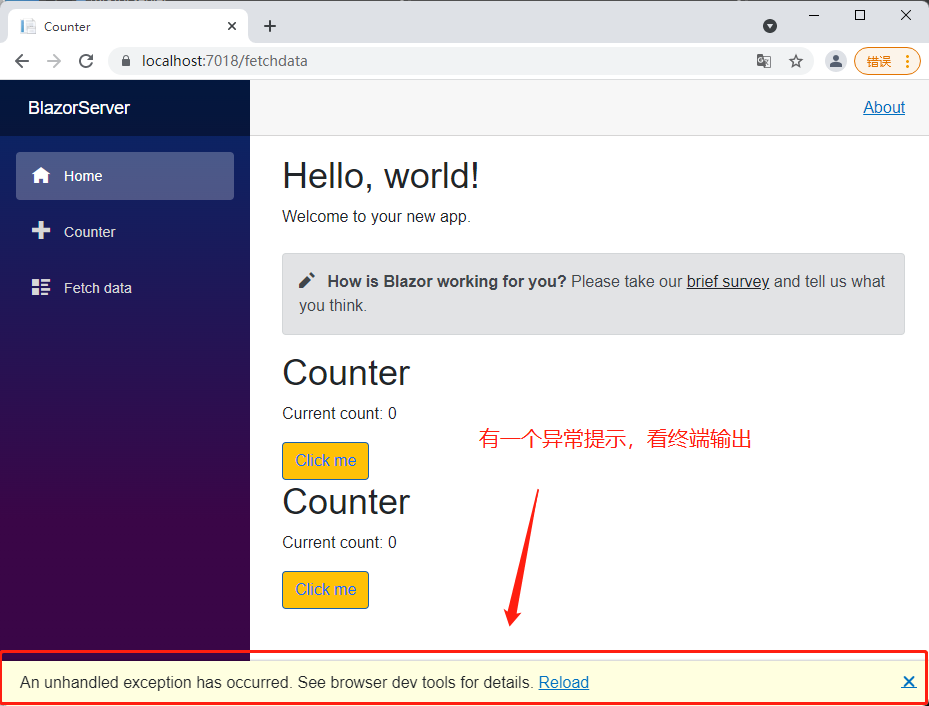
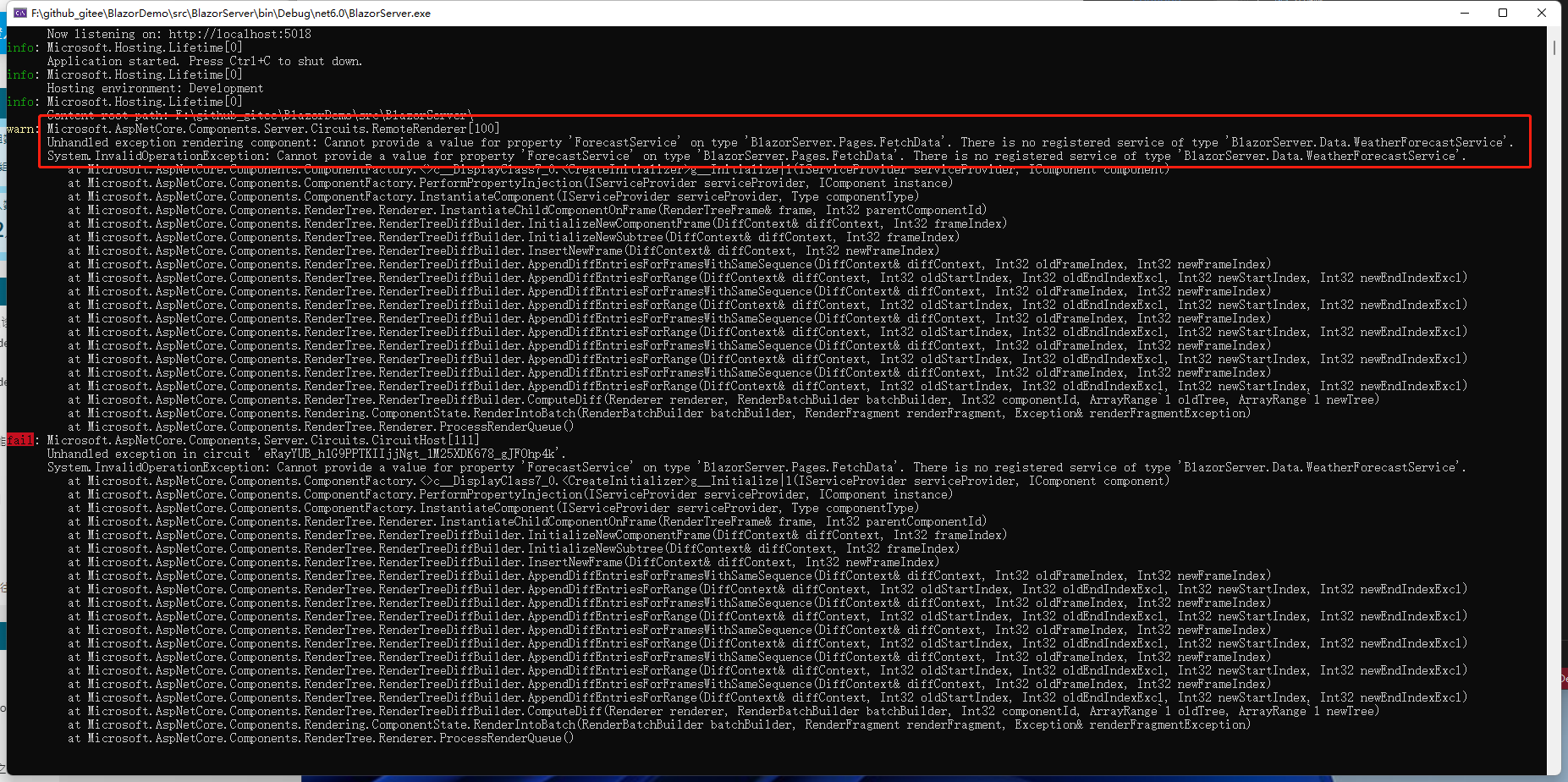
复制提示看看,这个提示很明确:
Cannot provide a value for property 'ForecastService' on type 'BlazorServer.Pages.FetchData'. There is no registered service of type 'BlazorServer.Data.WeatherForecastService'.
不过这并不是 day03 说到的依赖注入,依赖注入的目的是摆脱高层级程序必须依赖于低层级程序的窘境,以减少耦合性。举例来说,如果今天 FetchData.razor 要调用其他 Service,例如 NewWeatherForecastService 的同名方法 GetForecastAsync,取回 10 条数据,那只要用到 WeatherForecastService 的地方都必须修改,目前因为 Demo 的关系不多所以没感觉,如果日后有 10 几 20 几个地方要改呢?
这时候就是依赖注入发挥功能的时候了,先定义一个接口:interface IWeatherForecastService
namespace BlazorServer.Data;

public interface IWeatherForecastService
{
	Task<WeatherForecast[]> GetForecastAsync(DateTime startDate);
}
里面就写我们要的方法:Task<WeatherForecast[]> GetForecastAsync(DateTime startDate);
也不用实现(虽然接口也能实现:站长注:在C#8.0中,针对接口引入了一项新特性,就是可以指定默认实现,方便对已有实现进行扩展,也对面向Android和Swift的Api进行互操作提供了可能性。),接着让 WeatherForecastService 跟 NewWeatherForecastService 继承 IWeatherForecastService
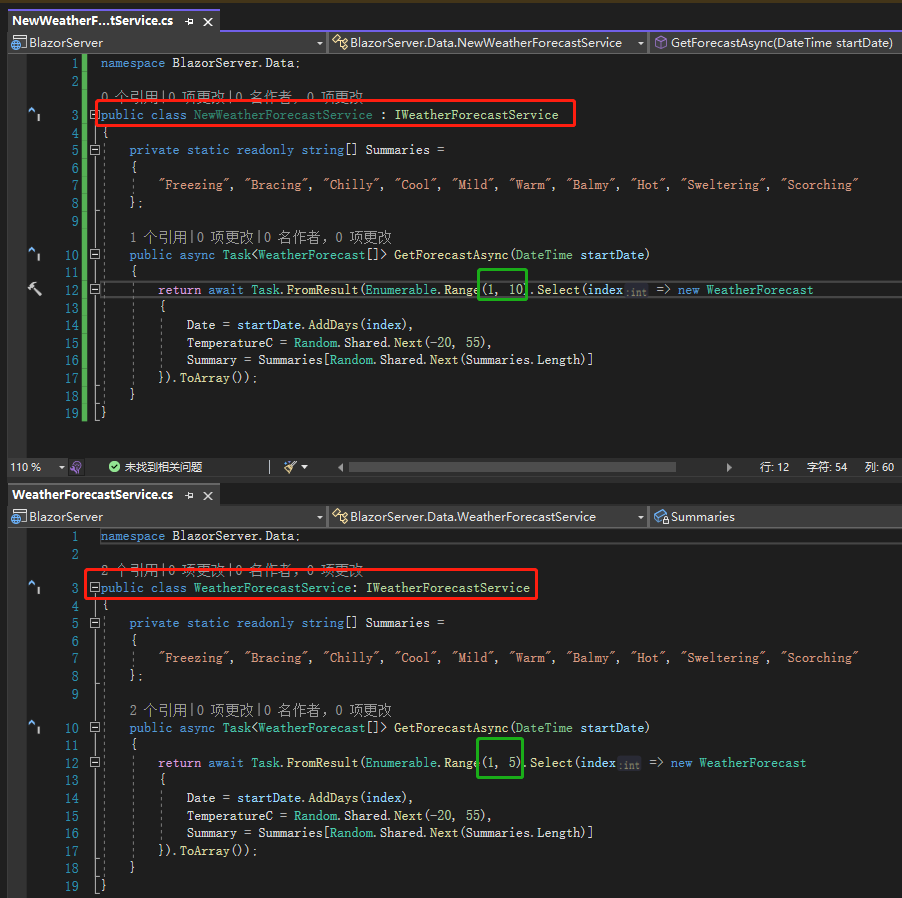
Program.cs 改用 IWeatherForecastService 跟 NewWeatherForecastService 注册

看上面截图,在 FetchData.razor 中,也改为注入 IWeatherForecastService
重整加载网页就能看到数据条数变为 10 条了

依赖注入的核心就是「对某个功能的依赖性是通过注入的方式」,不直接调用底层程序,而是调用底层程序的接口,即便底层程序修改也不会导致所有调用该程序的调用端都必须改动。
注:由于笔者是在写完这篇之后才想起来生命周期,原本想用 git rebase 的功能回到这一次的 commit 新增 Demo,但会有 git 断头疑虑,所以笔者会在 day 07 再说明生命周期,若有不便敬请见谅。
注:本文代码通过 .NET 6 + Visual Studio 2022 重构,可点击原文链接与重构后代码比较学习,谢谢阅读,支持原作者