

1. 前言
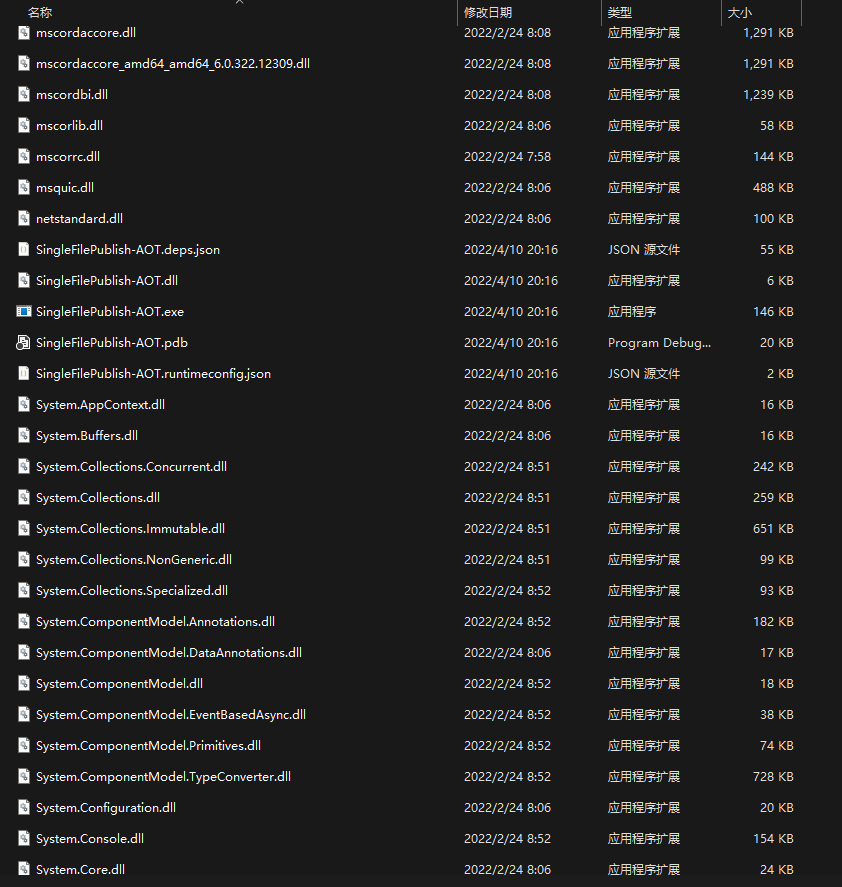
这里先和大家介绍一下.NET 一些发布的历史,以前的.NET 框架原生并不支持最终编译结果的单文件发布(需要依赖第三方工具),我这里新建了一个简单的 ASP.NET Core 项目,发布以后的目录就会像下图这样,里面包含很多*.dll文件和其他各类的文件。
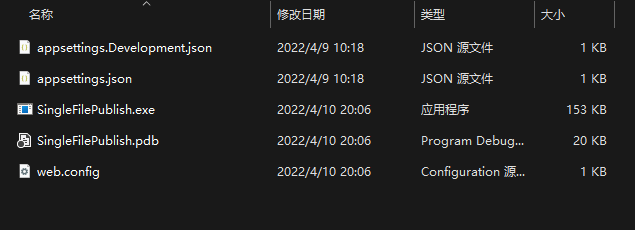
在.NET Core 2.1 时代,引入了单文件发布的功能,只需要在发布命令上,增加-p:PublishSingleFile=true参数就可以使用,从这以后就无需发布的文件夹就再也没有那么多的文件,只有一个*.exe文件和对应的配置文件和用于调试*.pdb的文件,如下所示:
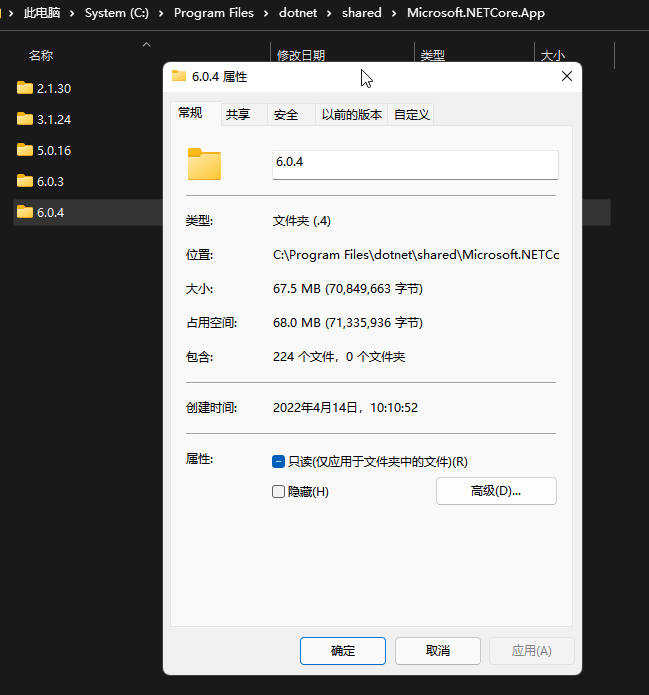
不过此时的.NET 还是需要安装一个大小为 50~130MB 左右的.NET Runtime 才能运行,这个其实不利于在客户端场景下程序的分发,大家应该能回忆起在安装一些软件之前,必须安装.NET Framework 的场景。
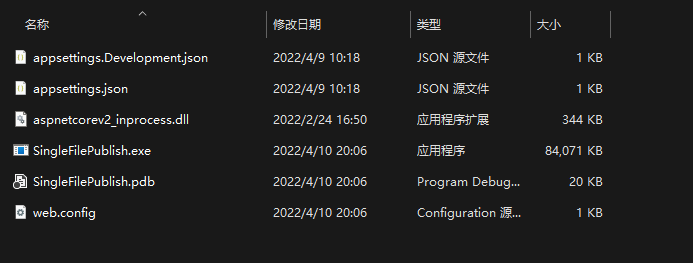
在单文件发布推出的同时,也可以通过--self-contained true的参数,将运行时也包含在发布文件内,这样的话就无需在目标机器上再安装.NET Runtime。不过由于它自带运行时,整个发布文件夹的大小就变得很大了,可以说比安装.NET Runtime 还要大一些(足足 82.4MB)。
程序本质上也就是文件,我们也可以通过压缩程序的方式,让它的大小变小,只需要加上-p:EnableCompressionInSingleFile=true参数。就可以将 80MB 的程序压缩至 44MB 左右。
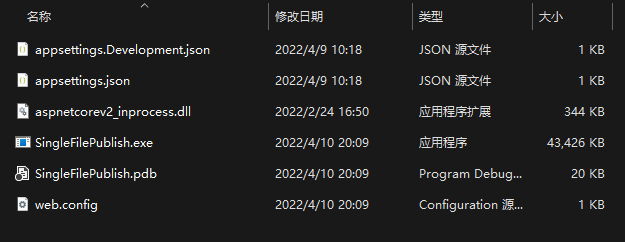
单文件发布体积大的原因就是包括了所有运行可能用到的依赖,不过有很多依赖是我们程序中用不到的,所以发布的时候可以加-p:PublishTrimmed=true参数,发布的时候移除掉没有使用的依赖,这样体积就可以降低很多(从 44MB 到 35MB)。
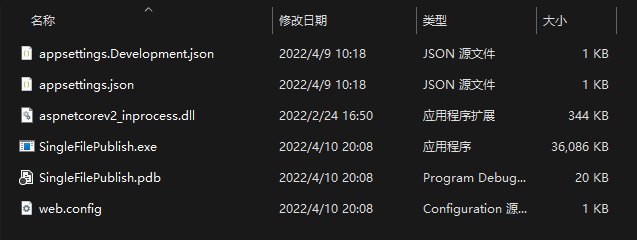
当然,移除没有使用的依赖和压缩是可以同时使用的,这样发布以后,体积就可以变得更小了,只需要 20MB 左右。
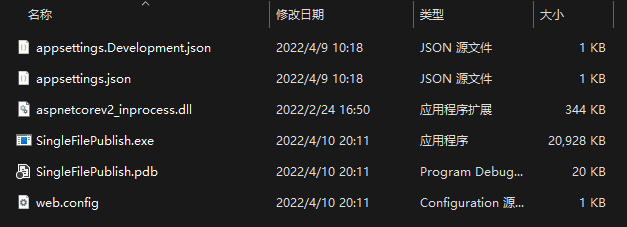
此时.NET 运行还是需要自带运行时,在运行.NET 程序的时候需要 JIT 来参与,这样的话在应用启动时需要一定的时间让 JIT 将 MSIL 编译到对应平台机器码,随后.NET 推出了预览版的Native-AOT,可以在编译时直接将代码编译成对应平台的机器码,以加快启动速度;另外由于不需要自带运行时,它整个的体积大小也变得很小。
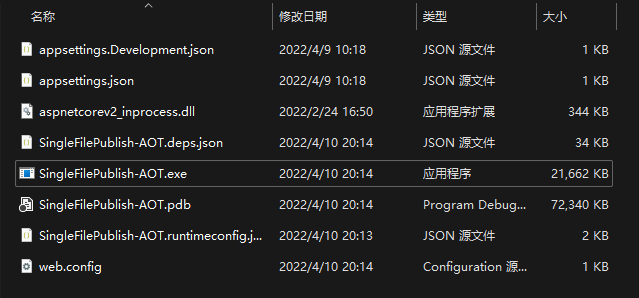
用于调试的pdb文件就会变得很大,不过真实发布的话也用不到这个文件,可以舍弃。AOT 以后的大小也就 20MB 左右。不过 AOT 也不是银弹,由于没有了 JIT,很多编译时优化就不能做了,Java 的 GraalVm 发布的时候就有一张五边形图,充分的说明了 JIT 和 AOT 之间的取舍。
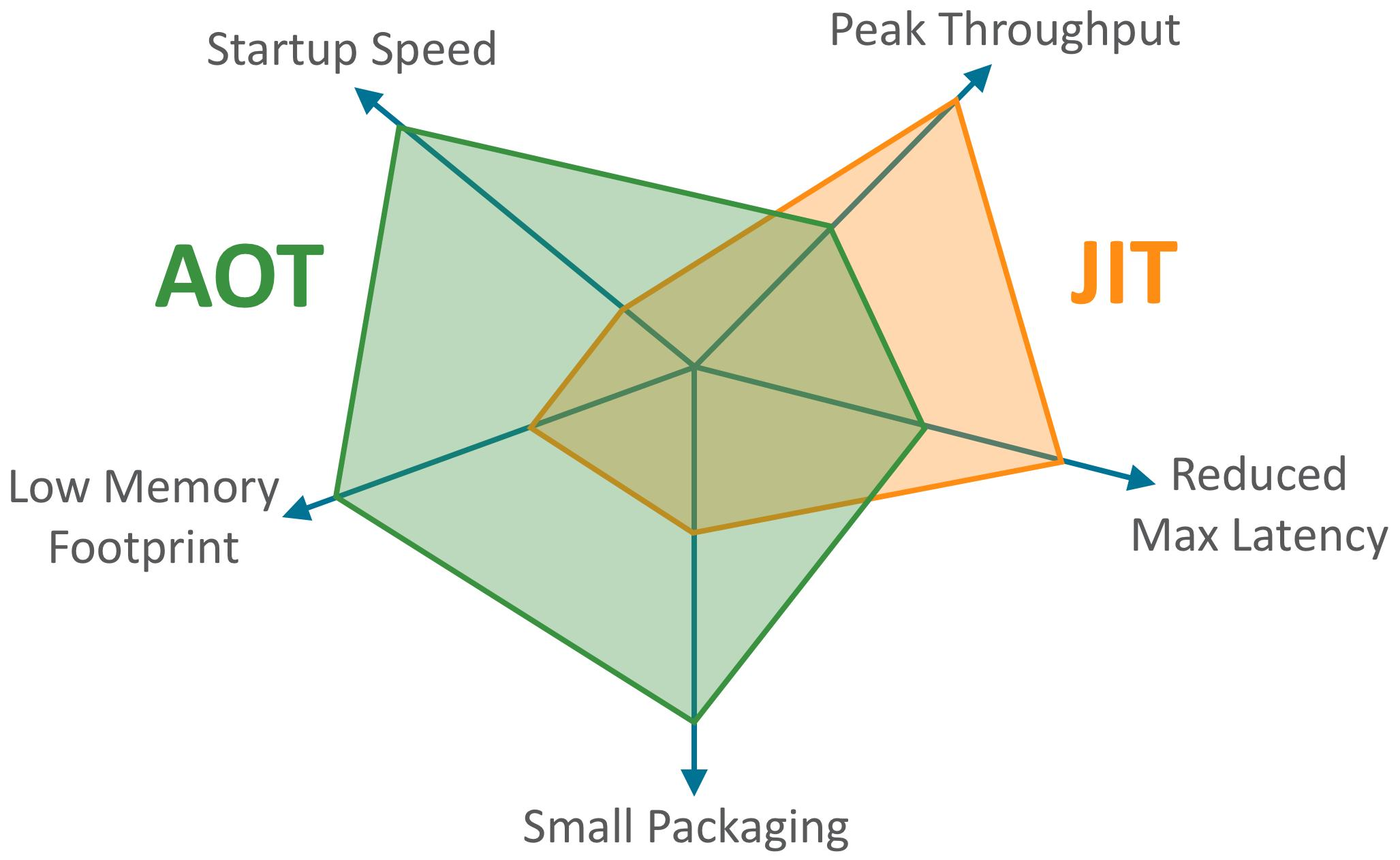
AOT 拥有更快的启动速度、更低的内存占用和更小的程序体积;当然它的吞吐量和最大延时表现的就没那么好(另外也会失去很多动态的特性,降低一些编程效率)。
心中会有一个疑问,这样的发布方式会对程序的性能有影响嘛?都说 AOT 会让程序启动速度变快,那么会变快多少呢?
2. 评测结果
我决定花点时间来研究一下,周末带着上面的问题我设计了一组测试,当然时间仓促有很多不严谨的地方,可以说就图一乐,望大家指出和海涵。一共设计了 12 个组,主要是对比单文件发布、AOT 发布和普通发布的区别;另外我也加入了 PGO、TC、OSR 和 OSA 等 JIT 参数,来看看不同 JIT 参数的影响。
PGO:PGO 即 Profile Guided Optimization(配置引导优化),通过收集运行时信息来指导 JIT 如何优化代码,相比以前没有 PGO 时可以做更多以前难以完成的优化。可以参考 hez 大佬的博客,还有一些链接 1、链接 2、链接 3.
TC:TC 即 Tiered Compilation(分层编译),是一种运行时优化代码的技术,每个 C#函数都会由 JIT 编译成目标平台的机器码,为了让方法能快点运行,JIT 一般会很粗犷(并不是最优,生成代码效率比较低)的编译,所以 JIT 就引入了 TC,当某一个方法频繁被调用时,JIT 就会为它编译一份更优的代码,这样下一次方法被调用时,它执行的会更有效率。想了解更多关于.NET 分层编译可以戳这个链接。
OSR:OSR 即 On-Stack Replacement(栈上替换),OSR 是一种在运行时替换正在运行的函数/方法的栈帧的技术。这个是为了分层编译引入的,因为有时候我们运行的方法是一个
while(ture)这种死循环方法,分层编译找不到时机能把低优化的代码替换成高优化的代码,所以引入了栈上替换,在方法运行中就可以替换成更优的方法。链接 1、链接 2。
OSR:OSA 即 Object Stack Allocation (对象栈上分配),在.NET 中的引用对象默认是分配在堆上的,回收时需要垃圾回收器介入,而且分配对象时必须初始化内存(全部初始化为 0),如果对象的生命周期可控,那么可以将它分配在栈上。这样做的好处就是能降低 GC 压力(方法栈结束,对象自动释放了),提升性能(可以进行标量替换,访问更快)。链接 1。
每个组的命名和参数如下所示。
| 项目 | 备注 |
|---|---|
| Normal | 正常发布,对照组 |
| Normal-WksGC | 正常方式,使用 WorkStationGC |
| Normal_PGO | 正常发布,使用 PGO |
| Normal_PGO_OSR | 正常发布,使用 OSR |
| Normal_PGO_OSR_OSA | 正常发布,使用 PGO+OSR+OSA |
| SingleFilePublish | 普通单文件发布 |
| SingleFilePublish-SelfContained | 包含运行时单文件发布 |
| SingleFilePublish-SelfContained-Trim | 包含运行时单文件发布+剪裁程序集 |
| SingleFilePublish-SelfContained-Compress | 包含运行时单文件发布+压缩程序集 |
| SingleFilePublish-SelfContained-Trim-Compress | 包含运行时单文件发布+剪裁+压缩程序集 |
| AOT-Size | AOT 编译,使用 Size 模式 |
| AOT-Speed | AOT 编译,使用 Speed 模式 |
下方的小标题是评测项的方式和评测的结果,每个项我们都会跑 5 次,最后取平均值。
2.1 发布相关
在本节中,Normal 那几项编译参数都是一样的,所以结果几乎没有差别,无需过多关注,忽略就好。
2.1.1 发布耗时
发布耗时这个参数,是记录了dotnet publish的耗时,其中会清理/bin、/obj等文件夹,避免缓存带来的影响。
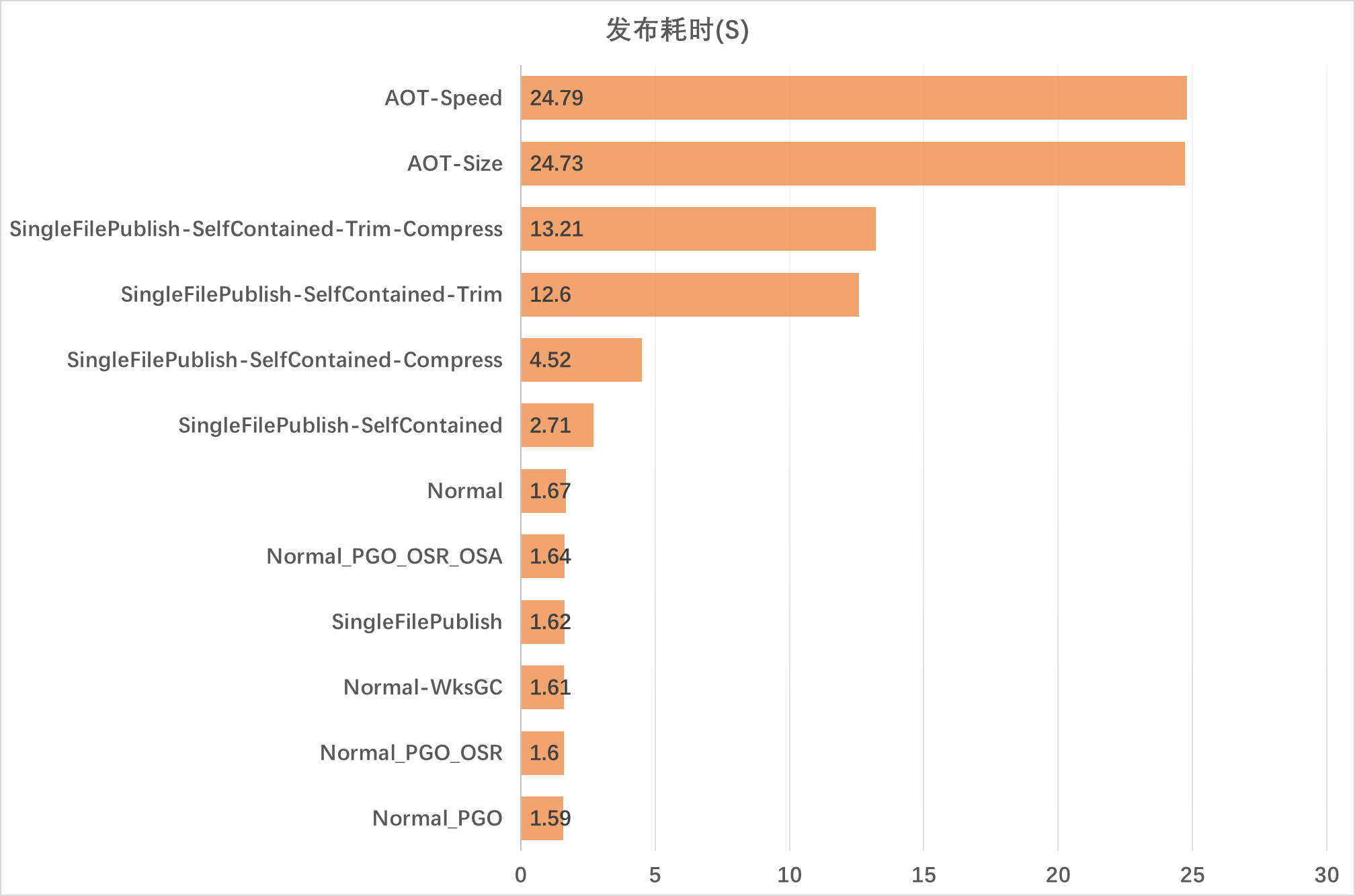
可以看到单文件发布和 AOT 发布还是比较吃性能的,特别是 AOT 场景下简单的 ASPNET Core 项目的发布时间就到了接近 30 秒和一些 Rust、C++项目编译速度有的一拼了,要是更大的项目估计会更长。不过正常发布还是很快的,不会一两秒内都能完成。
2.1.2 目录大小
目录大小是直接统计发布以后的目录所占用的硬盘空间,注意:Normal 发布都计算了 67.5MB 的.NET Runtime 占用的空间。
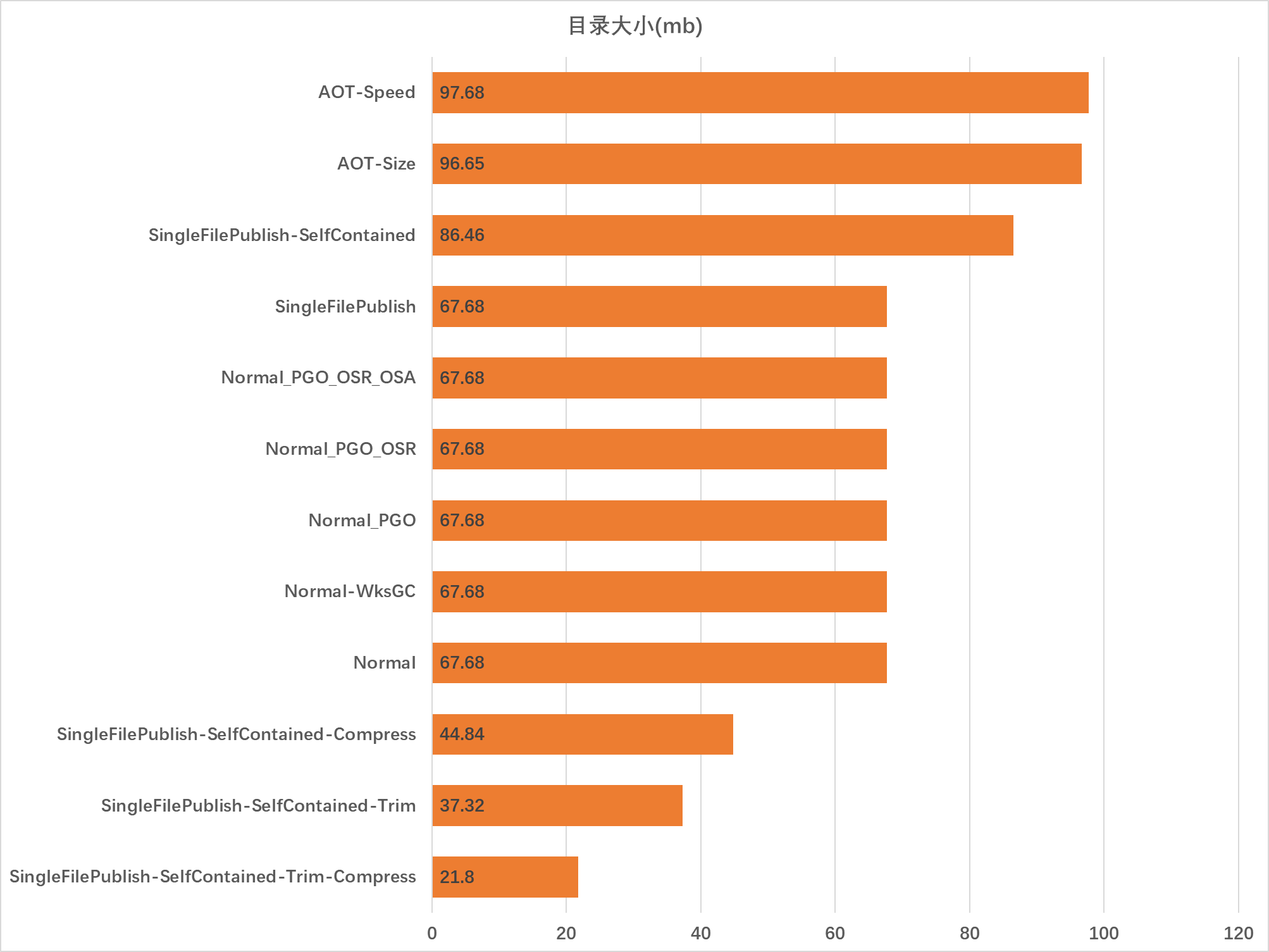
为什么 AOT 的目录大小会这么大呢?主要就是上文中提到的用于调试程序的pdb文件变的很大,这是因为 AOT 以后程序本身缺失很多用于调试的数据,只能存放在pdb文件中,不过这个对于使用没有什么影响,发布时也可以通过-p:DebugType=false和-p:DebugSymbols=false参数让它不生成pdb文件。
2.1.3 程序大小
程序大小统计只发布文件中需要运行程序的大小,这个是和分发项目息息相关的,越小的程序体积,就越容易分发。注意:Normal 发布都计算了 67.5MB 的.NET Runtime 占用的空间。
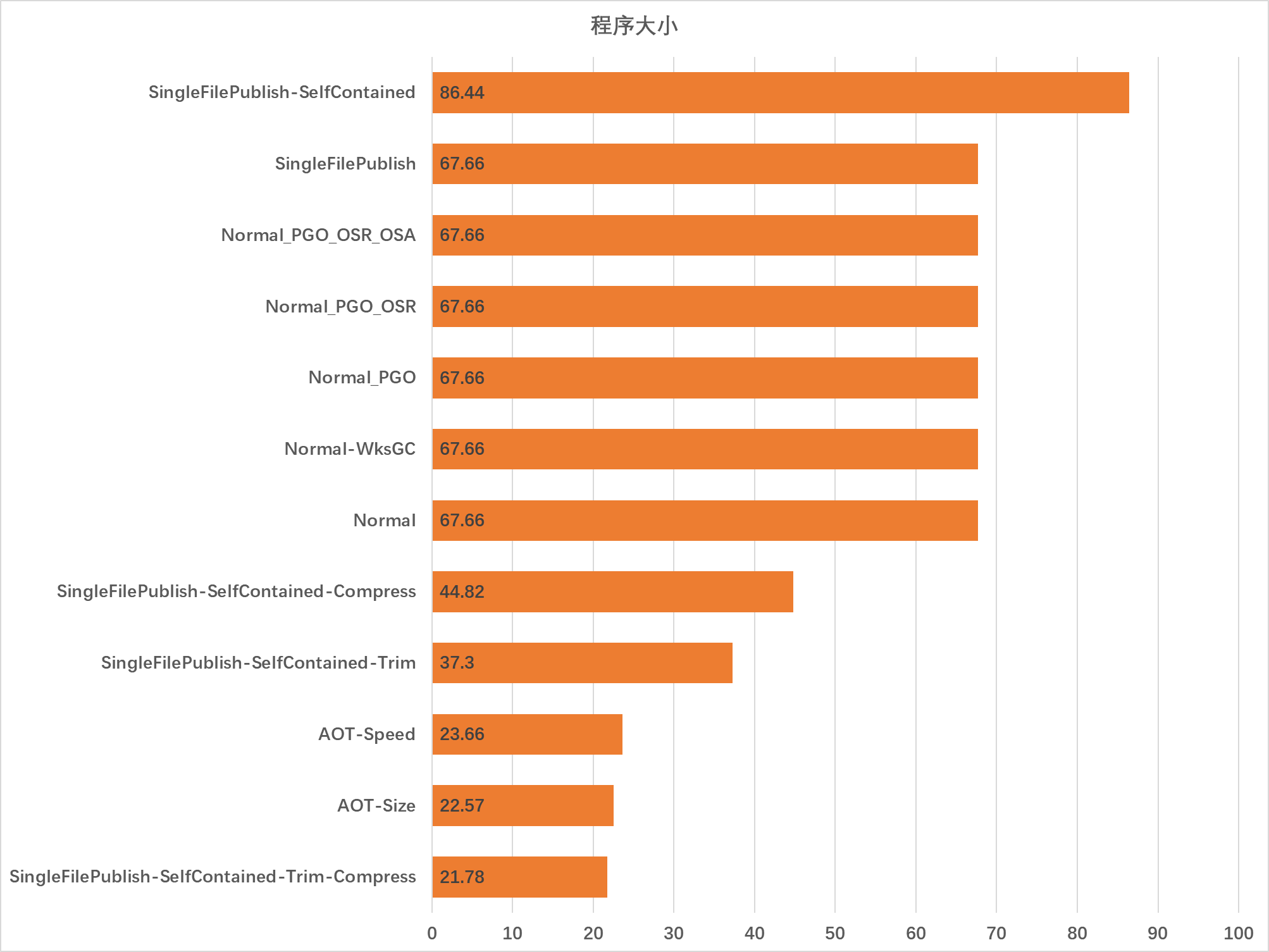
如果目标平台已经预装了.NET Runtime,其实正常发布的效率是最高的,只有一百多 KB 的大小;次之就是单文件发布+自包含运行时+裁剪+压缩,大小只有 20 来 MB,也比较利于分发。AOT 的表现也同样亮眼。
2.2 程序运行相关
程序运行相关一共有三个指标,分别为启动耗时、应用启动耗时和内存占用,这里没有设置 CPU 相关的指标,是因为启动程序 CPU 基本都是 0 没有太大的参考意义。下方流程图展示了这几个指标的采集时间。
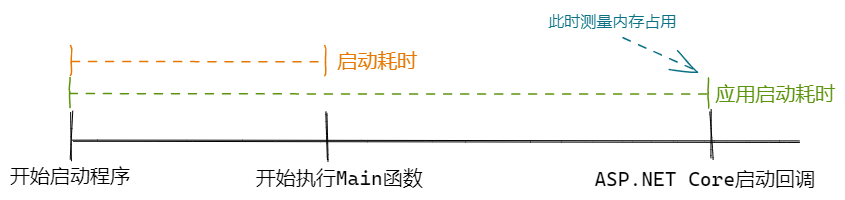
2.2.1 启动耗时
程序的启动耗时结果如下所示。
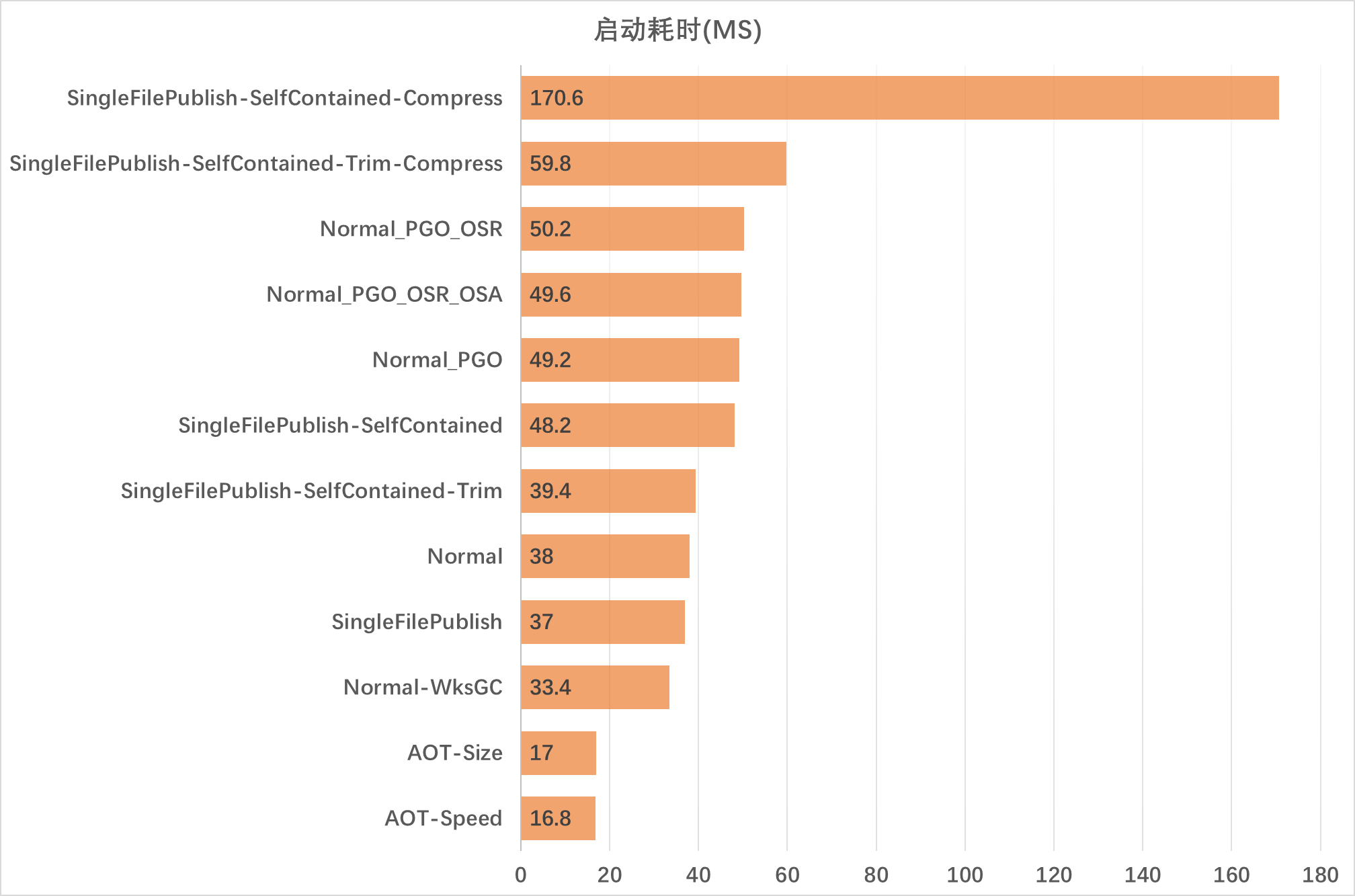
我们可以看到两个极值,最大的单文件+自包含运行时+压缩启动耗时到 170ms,因为没有剪裁程序集,需要解压缩的依赖很大,所以启动耗时会比较长一点。最小的 AOT-Speed 模式只需要 16.8ms 就能启动程序,看来没有了 JIT 编译和程序集加载的过程,果然快很多。
2.2.2 应用启动耗时
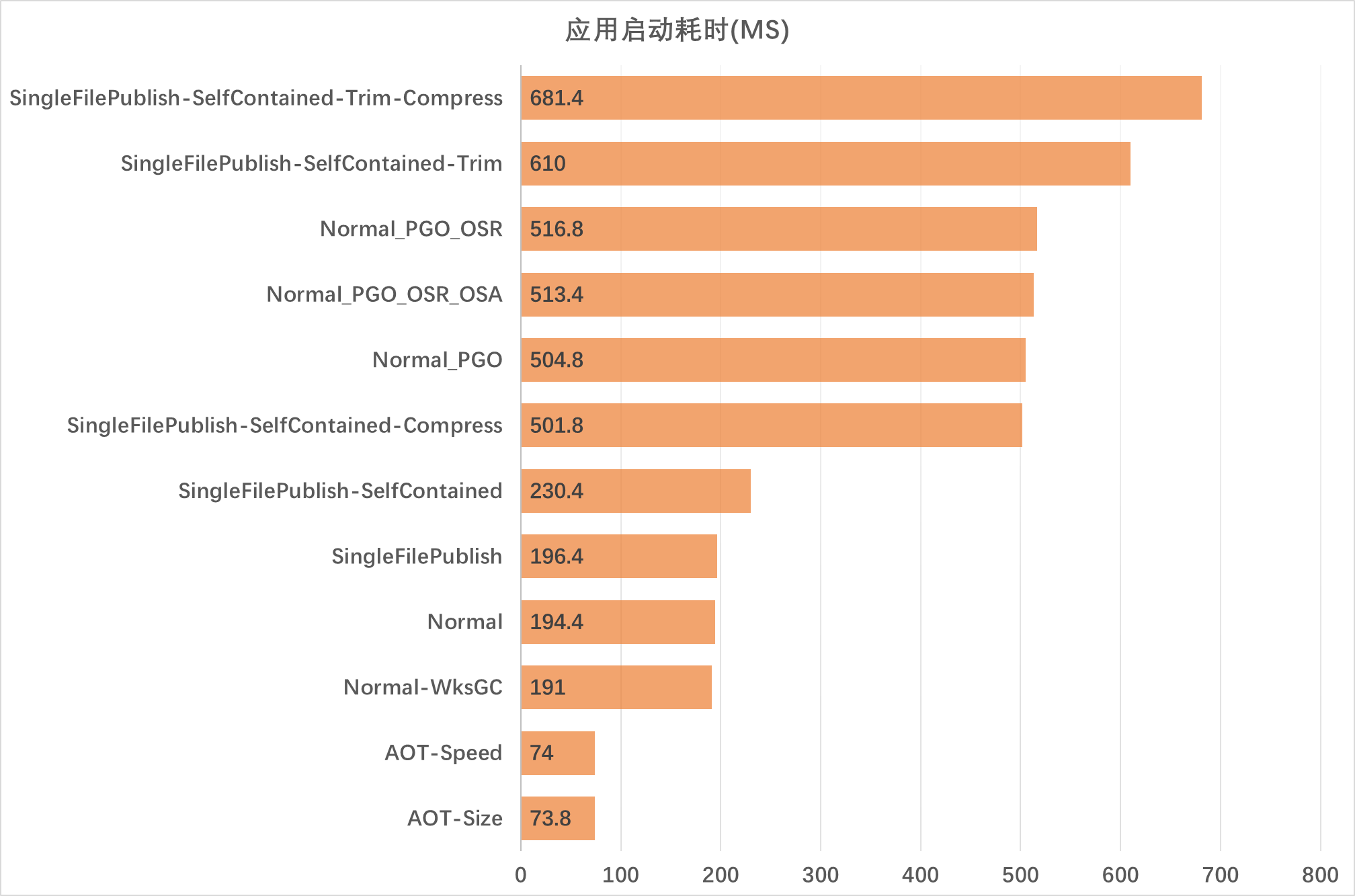
应用启动耗时和程序启动耗时排列基本一致,像单文件+自包含运行时+压缩启动耗时需要 0.5s+才能启动程序,而 AOT 模式只需要 70ms,中间差了七八倍。不过正常发布启动速度也很快,只需要 200ms 不到的时间。
2.2.3 内存占用
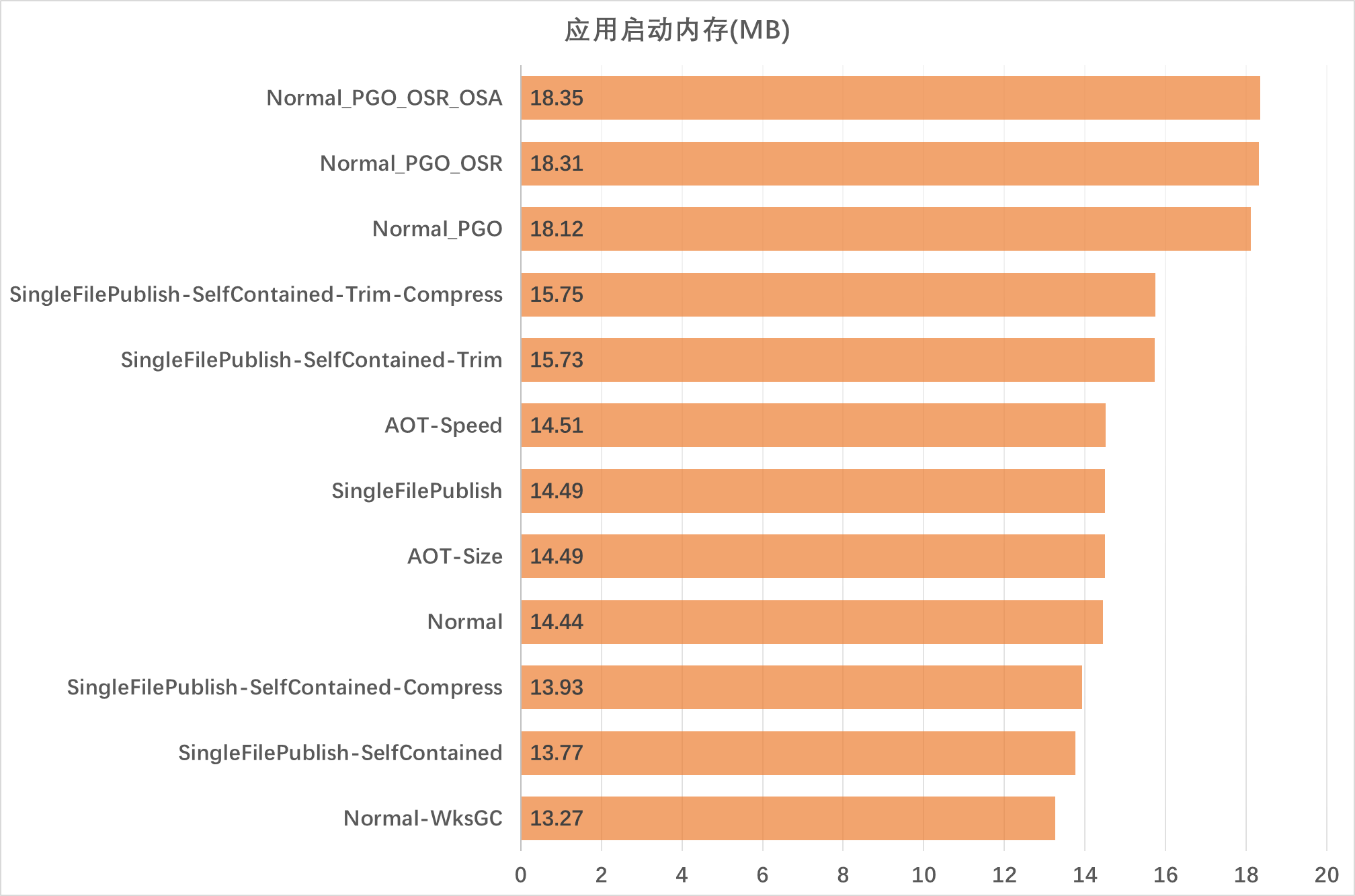
内存占用各个方式差别不大,但是也提醒到了我们,如果想让内存占用小一些,那么可以使用 WorkstationGC 模式。引入动态 PGO 之类的 JIT 增强特性以后,相应的会多占用一些内存。
2.3 性能压测
机器配置:
CPU:I7 8750H 关闭超线程
RAM:48GB
Client:设置 CPU 亲和性,绑定 3 个核心
Server:设置 CPU 亲和性,绑定 2 个核心
由于笔者机器配置有限,没有做Client和Server的环境隔离,只做了简单的 CPU 绑核,所以的出来的数据仅供参考。
2.3.1 压测 QPS
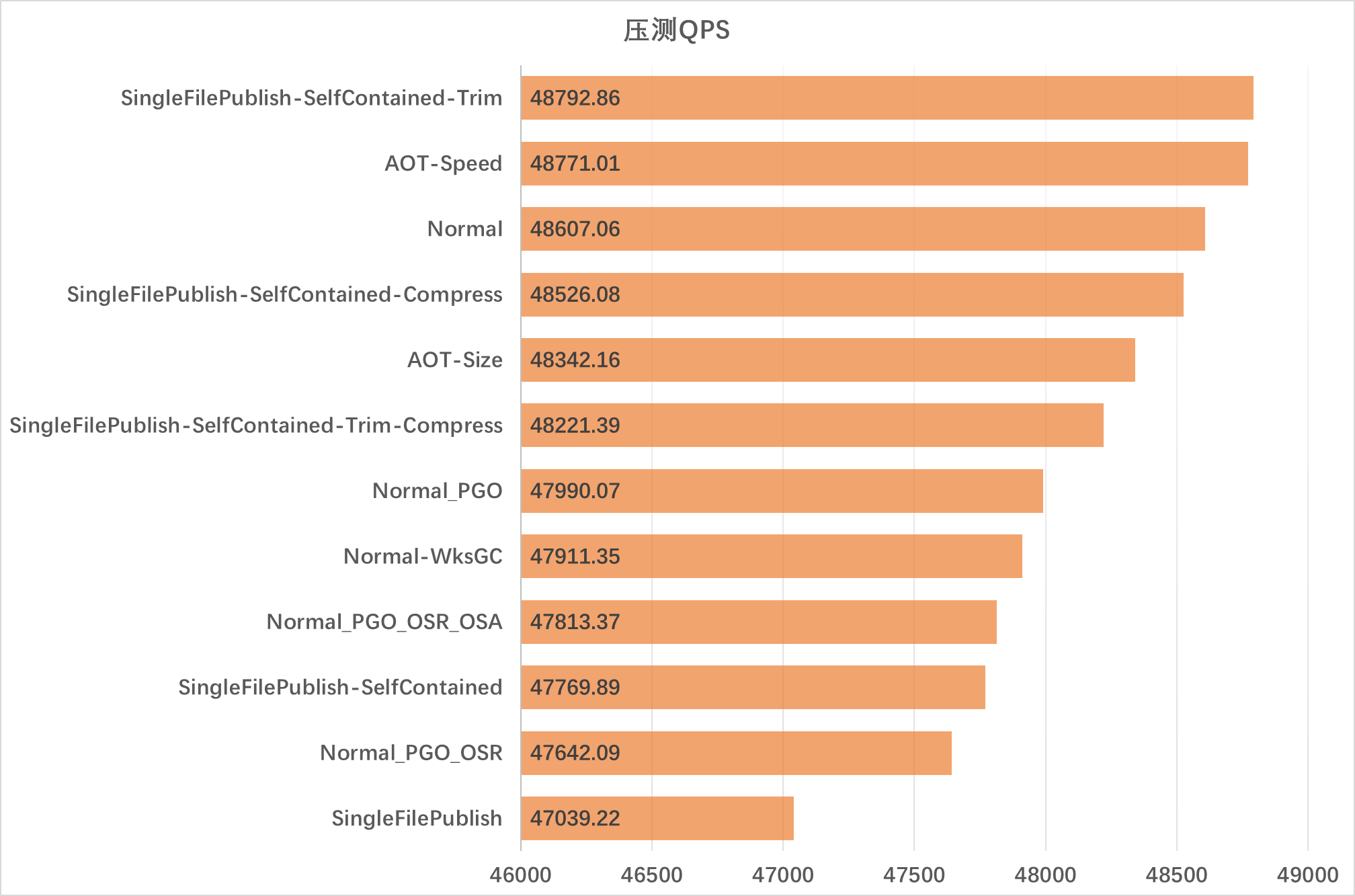
可以看到其实各个方式差别不是很大,都取得了4.7Wqps以上的成绩,最大和最小在 4%以内。由于这是 IO 密集型任务,JIT、PGO 的优势没有体现出来,后面可以试试一些计算密集型的任务,或者直接看 hez 的博客,上文介绍 PGO 中有链接。
2.3.2 单次请求耗时
下图中在条形图内较大的是单次请求耗时(MAX),在条形图外的0.x的数据是单次请求耗时(AVG)。单位是ms.
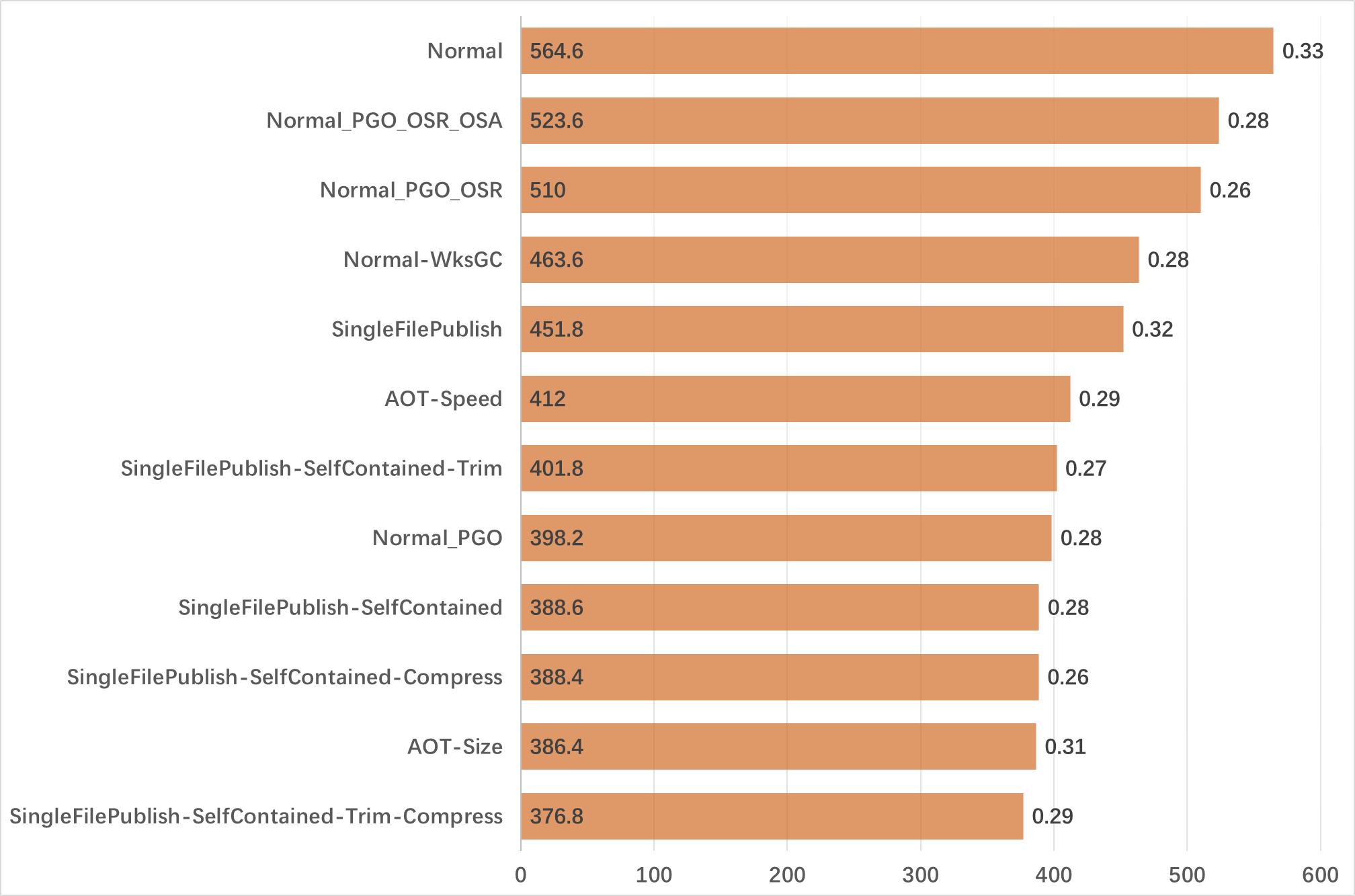
我们发现平均耗时基本在0.3ms左右,AOT 和单文件+自包含运行时+剪裁+压缩的表现很亮眼,只有370ms左右。
2.3.3 压测内存占用
下图中深色代表内存占用(MAX)而浅色代表内存占用(AVG),单位是MB.
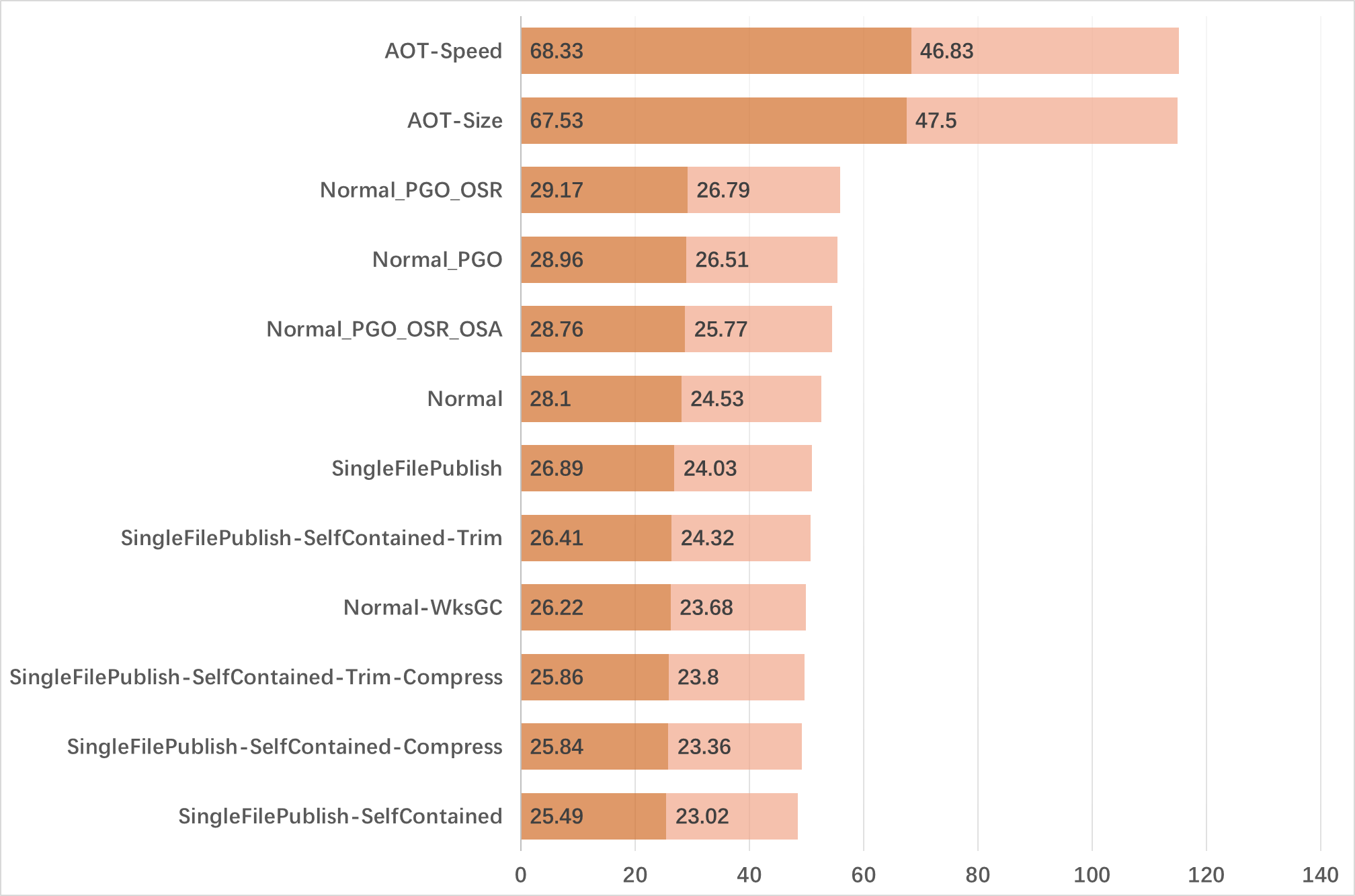
可以看到除了 AOT 以外的方式,内存占用是大差不差的,4.7Wqps下只需要25MB左右的内存其实很不错了,近似的数字可以理解为误差;另外开启了 JIT 特性以后,就需要占用更多的内存。AOT 的话内存占用就比较多了,可能 GC 算法在 AOT 环境下的优化还不够。
2.3.4 压测 CPU 占用
下图中深色代表CPU占用(MAX)而浅色代表CPU占用(AVG)。单位为百分比;1 个 CPU 核心是100%,如果占用 5 个 CPU 核心那么就是500%。
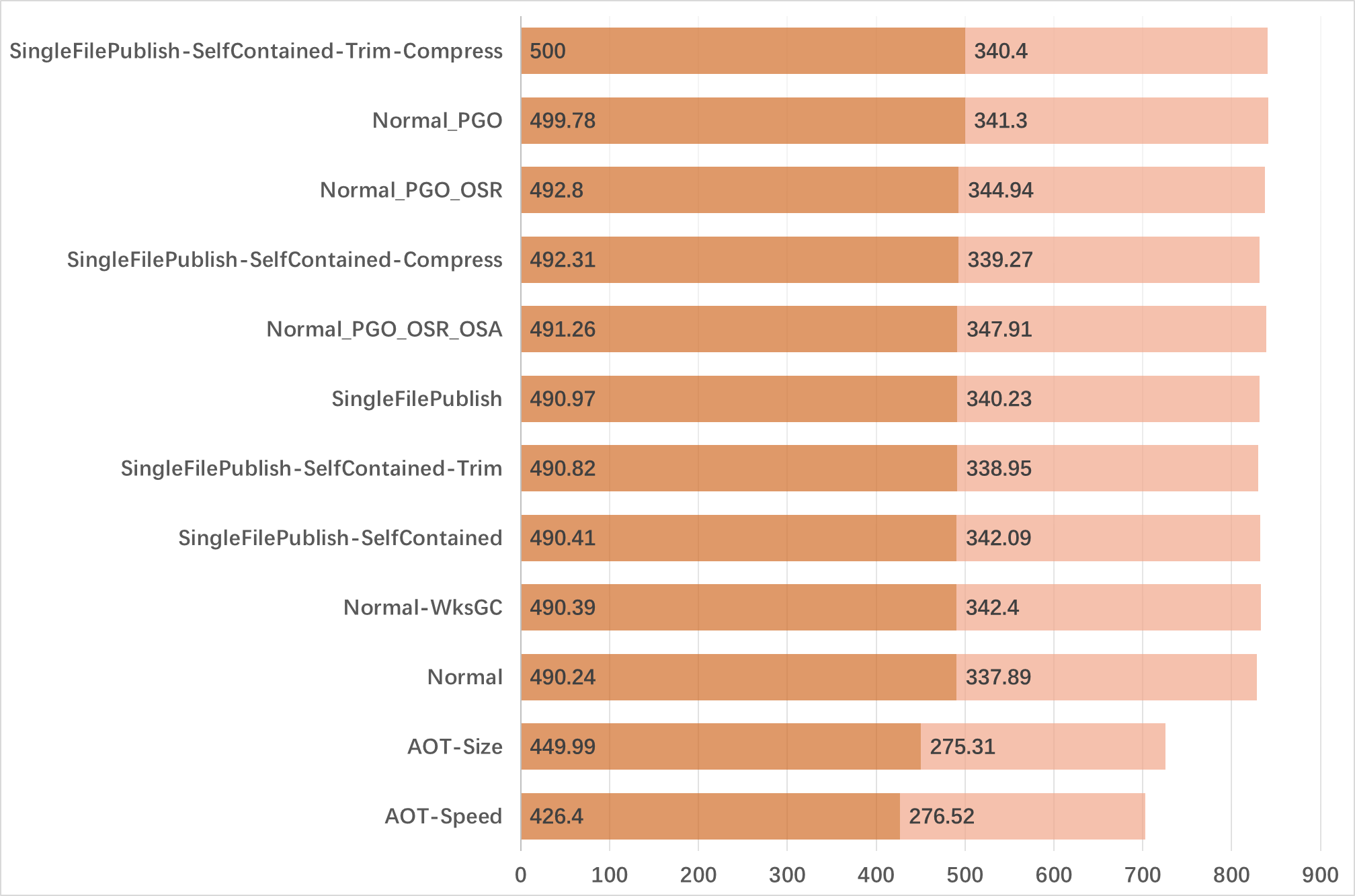
基本上都没有啥区别,但是 AOT 方式占用率就小了很多,毕竟没有了 JIT 这个步骤。
3. 总结
这个结论也就是图一乐,毕竟目前 AOT 还没有正式发布(已经合并主分支.NET7 会正式发布),还有很多值得优化的地方。另外像 OSR、OSA 这些特性也还没有完全定下来,下面是一些和对照组比较的百分比数据,原始数据和测试代码见GitHub。后续.NET7 正式发布了,再跑一下试试。

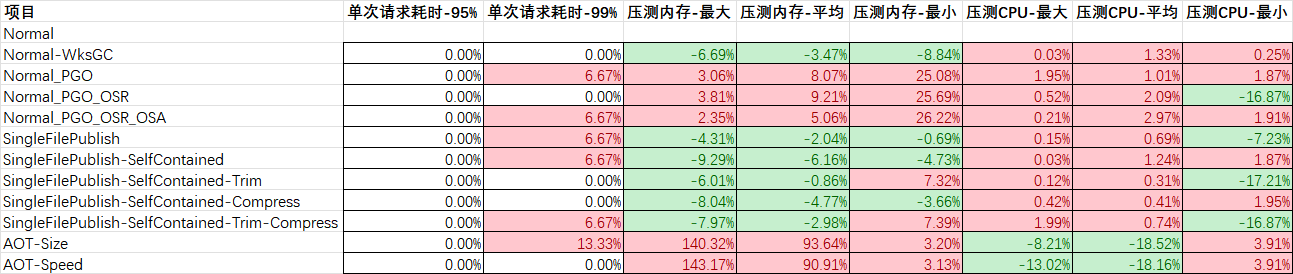
回答开始提到的问题,总得来说 AOT 对缩小软件大小,提升应用启动速度有着很大的作用,但是目前需要很长的发布时间和占用更多的内存。
另外 PGO 等一些 JIT 特性需要比正常情况下占用更多的内存,其性能的优势在这个 IO 密集的场景没有很好的表现出来。
最后在多说几句,我一直觉得 C#是一个很好的语言,.NET 是一个很好的平台。从 2002 年一路走来,今年是.NET 的第 20 个年头,各种新特性相继加入,性能也已经站在了第一梯队,希望以后能有更多的发展吧。
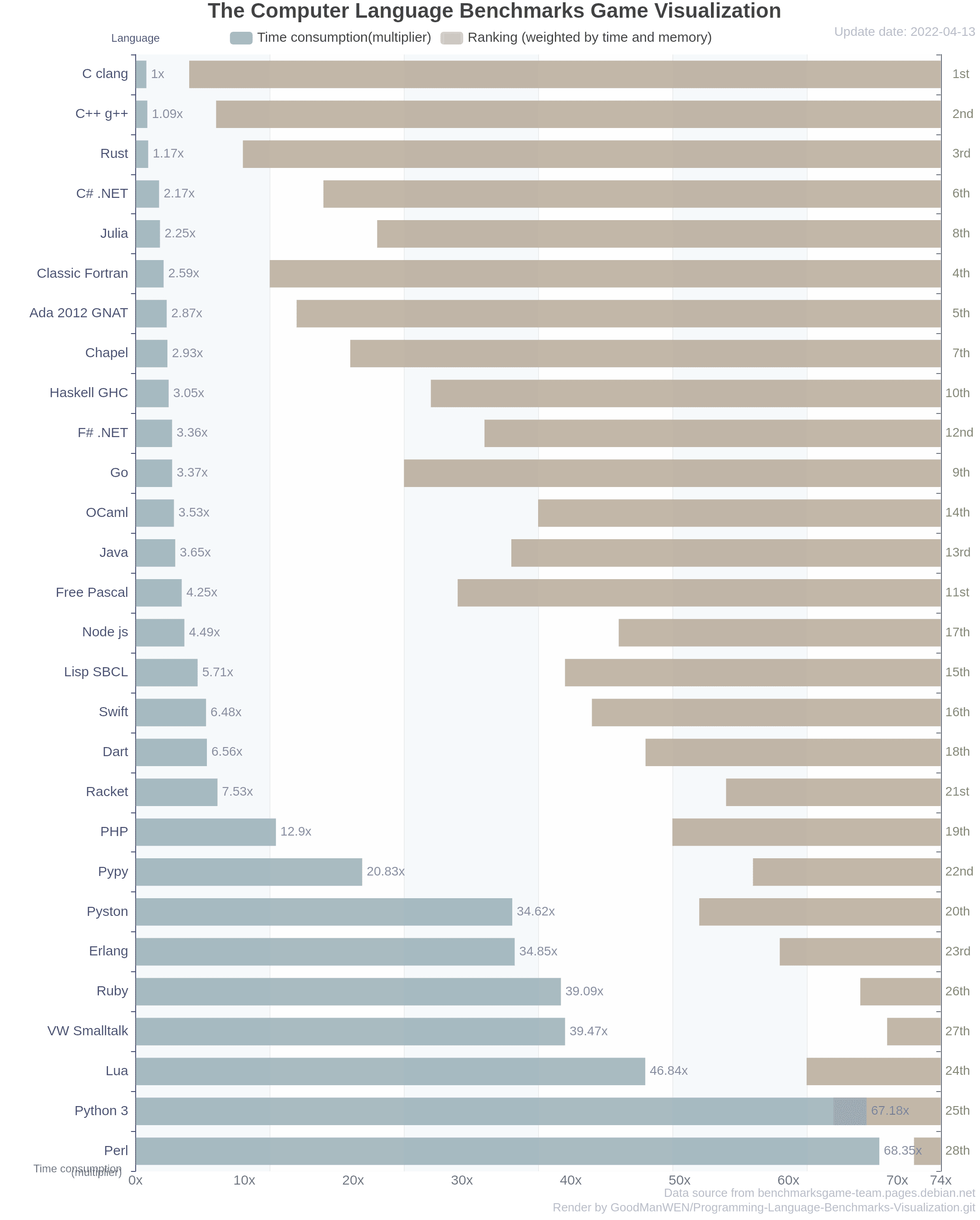
PS:在前几天更新的 Benchmarks Game 数据里面,C# .NET 已经是带 JIT 语言里面跑的最快的了,仅次于 C、C++、Rust 等编译型语言,详情可见链接 1、链接 2。
原文作者:InCerry
原文标题:单文件发布对程序性能的影响
原文链接:https://www.cnblogs.com/InCerry/p/Single-File-And-AOT-Publish.html