Part1 介绍
EasyNetQ 是用于RabbitMQ的简单易用 .NET API 。
如果您只想尽快启动并运行,请转到快速入门指南。
EasyNetQ 的目标是提供一个库,用于在 .NET 中使用 RabbitMQ 尽可能简单。为了做到这一点,它通过强制执行一些简单的约定来以灵活性换取简单性。这些包括:
- 消息应该由
.NET类型表示。 - 消息应按其
.NET类型进行路由。
这意味着消息是由 .NET 类定义的。您要发送的每种不同的消息类型都由一个类表示。该类必须是公共的,必须具有默认构造函数和公共读/写属性。您通常不会在消息中实现任何功能,而是将其视为简单的数据容器或数据传输对象 (DTO)。这是一个简单的消息:
public class MyMessage
{
    public string Text { get; set; }
}
EasyNetQ 按消息类型路由消息。 当您发布消息时,EasyNetQ 会检查其类型并根据类型名称、命名空间和程序集为其提供路由键(routing key)。 在消费端,订阅者订阅一个类型。 订阅一个类型后,该类型的消息会被路由到订阅者。
默认情况下,EasyNetQ 使用 Newtonsoft.Json 库将 .NET 类型序列化为 JSON。 这样做的好处是消息是人类可读的,因此您可以使用 RabbitMQ 管理应用程序等工具来调试消息问题。
Part2 API 设计
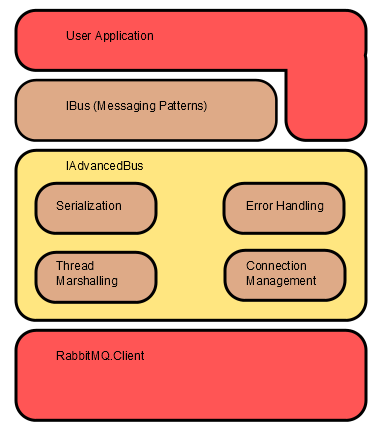
EasyNetQ 是在 RabbitMQ.Client 库之上提供服务的组件集合。它们执行序列化、错误处理、线程编组、连接管理等操作。它们由 mini-IoC 容器组成。您可以很容易地用您自己的实现替换任何组件。因此,如果您想要 XML 序列化而不是内置 JSON,只需编写 ISerializer 的实现并将其注册到容器中。
这些组件以 IAdvancedBus API 为前端。这看起来很像 AMQP 规范,实际上您可以从这个 API 运行大多数 AMQP 方法。此 API 对您隐藏的唯一 AMQP 概念是通道。这是因为通道是一个令人困惑的低级概念,一开始就不应该成为 AMQP 规范的一部分。老实说,“高级”对于这个 API 来说并不是一个很好的名字,Iamqp会好得多。
位于高级 API 之上的是一组消息传递模式:发布/订阅、请求/响应和发送/接收。这是 EasyNetQ 的“主见”部分。这是我们对如何实施这些模式的看法。灵活性很小;要么你接受我们的做事方式,要么你不使用它。目的是您,用户,不必花费脑力去重新发明相同的模式;您不必在每次只想发布和订阅消息时都做出选择。它旨在实现 EasyNetQ 的核心目标,即尽可能轻松地使用 RabbitMQ。
这些模式位于 IBus API 后面。再一次,这是一个糟糕的名字,它与消息总线的概念几乎没有关系。更好的名称是 IPackagedMessagePatterns。
IBus 旨在为 80% 的用户、80% 的时间工作。这并不详尽。如果您要实现的模式不是由 IBus 提供的,那么您应该使用 IAdvancedBus。这样做没有问题,EasyNetQ 就是这样设计的。
Part3 为什么我需要 EasyNetQ?
RabbitMQ 不是已经有 .NET 客户端了吗?
是的,它确实。您可以在此处下载 .NET AMQP 客户端库。
那么为什么我需要 EasyNetQ?RabbitMQ .NET 客户端实现了 AMQP 协议的客户端(而 RabbitMQ 实现了服务器端)。AMQP 旨在作为消息传递的 HTTP。它被设计成跨平台和语言无关的。它还旨在灵活地支持基于 Exchange/Binding/Queue 模型的各种消息传递模式。
拥有这种灵活性很棒,但随着灵活性而来的是复杂性。这意味着您需要编写大量代码才能实现 RabbitMQ 客户端。通常,此代码将包括:
- 实现消息传递模式,例如发布/订阅或请求/响应。虽然,公平地说,.NET 客户端确实在这里提供了一些支持。
- 实现路由策略。您将如何设计交换队列绑定,以及如何在生产者和消费者之间路由消息?- 实现消息序列化/反序列化。您将如何将 AMQP 中消息的二进制表示转换为您的编程语言可以理解的内容?
- 为订阅实现消费者线程。您需要有一个专门的消费者循环来等待您订阅的消息。您将如何处理多个订阅者或临时订阅者,例如等待请求响应的订阅者?
- 实现订阅者重新连接。如果连接中断或 RabbitMQ 服务器弹跳,您如何检测它并确保重建所有订阅?
- 了解并实施服务质量设置。您需要进行哪些设置以确保您拥有可靠的客户端。
- 实现错误处理策略。如果您的客户端收到格式错误的消息,或者抛出意外异常,您应该怎么做?
- 实现发布者确认可靠消息传递。
EasyNetQ 旨在将所有这些问题封装在一个简单易用的库中,该库位于现有 AMQP 客户端之上。它是 RabbitMQ 在大容量商业环境中几年使用经验的结晶。
Part4 简单使用
接到 RabbitMQ 代理
var bus = RabbitHutch.CreateBus("host=localhost");
发布消息
await bus.PubSub.PublishAsync(message);
发布一条延迟 5 秒的消息
await bus.Scheduler.FuturePublishAsync(message, TimeSpan.FromSeconds(5));
订阅消息
await bus.PubSub.SubscribeAsync<MyMessage>(
    "my_subscription_id", msg => Console.WriteLine(msg.Text)
);
RPC 服务器
await bus.Rpc.RespondAsync<TestRequestMessage, TestResponseMessage>(request =>
    new TestResponseMessage{ Text = request.Text + " all done!" }
);
Part5 地址
- 原文链接:https://github.com/EasyNetQ/EasyNetQ/wiki/Introduction
- 仓库链接:https://github.com/EasyNetQ/EasyNetQ